

Please find all scientific publications of IGB under > scientific publications
For more detailed information please refer to our > library catalogue
11 - 20 of 201 items
- Programme area:1) Biodiversity in a Changing World
September 2025
Limnology and Oceanography Letters. - 10(2025)6, 977-989
Diel variation in CO2 flux is substantial in many lakes
September 2025
Nature Water. - 3(2025), 963–964
Europe’s water law needs genomic resolution
The authors recommend a new genetic approach for the obligatory measurements under the European Water Framework Directive (WFD). Currently, the diversity of phytoplankton – i.e. microalgae – is assessed as a key parameter for water quality using an inverse microscope technique that has been in use since 1958.
August 2025
Limnology and Oceanography. - 70(2025)10, 3029-3042
Long-term changes to plankton communities in artificially heated lakes

August 2025
Scientific Data. - 12(2025), Art. 1488
Global thermal tolerance compilation for freshwater invertebrates and fish
The authors present the first comprehensive and openly accessible compilation of freshwater species’ thermal tolerance, covering over 900 invertebrates and fish, and including English and non-English studies to expand representation and reduce biases.
August 2025
Limnology and Oceanography. - 70(2025)10, 2815-2828
Hydrodynamic processes influence nitrous oxide production and emission potential in a mountainous river estuary: Insights from microbial community patterns and model predictions
August 2025
Scientific Reports. - 15(2025), Art. 29261
Contrasting niche dynamics in the invasion processes of two congeneric dinoflagellates
August 2025
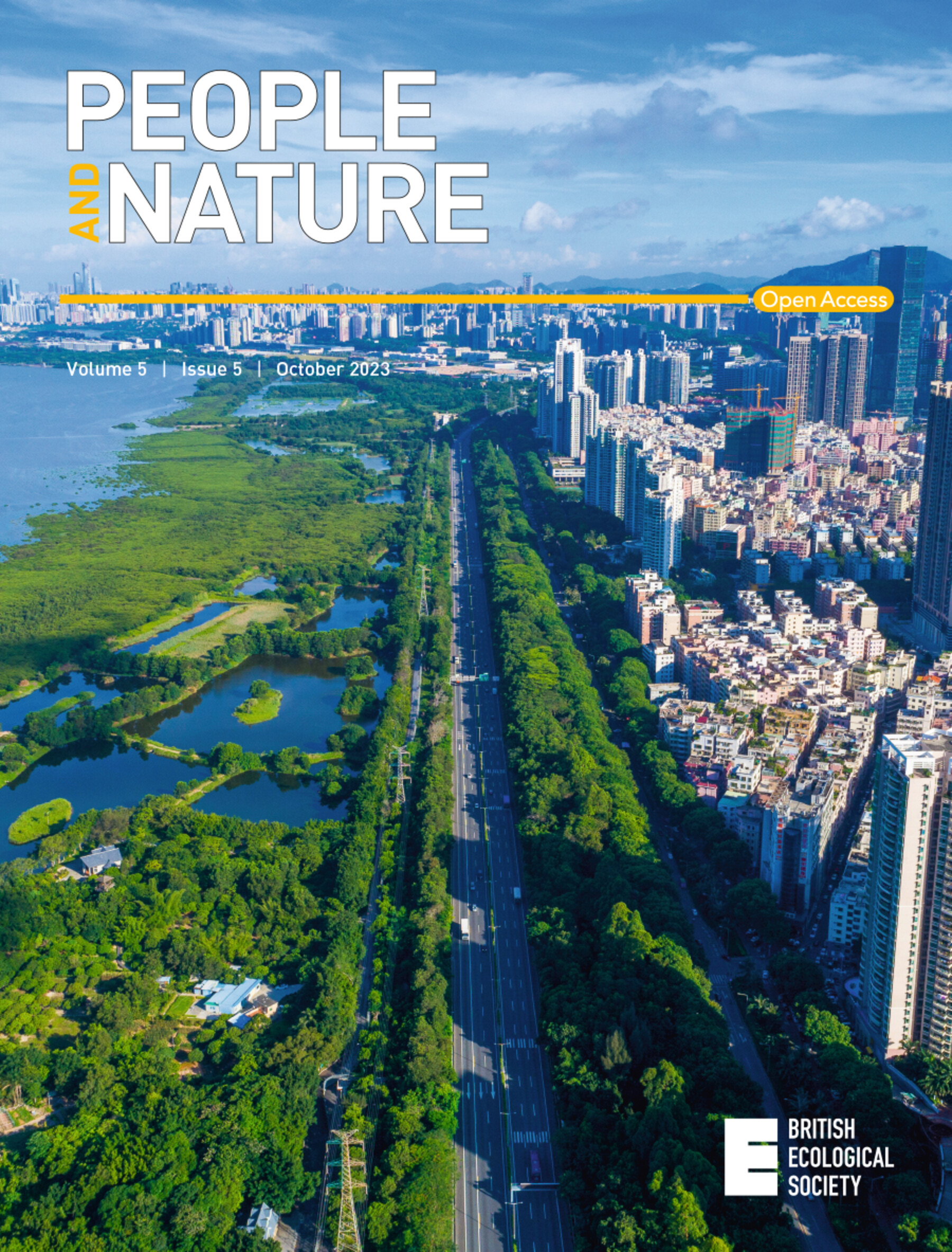
People and Nature. - 7(2025)9, 2212-2227
Implementing the European Union Biodiversity Strategy: Interlinked challenges and a potential way forward

August 2025
Frontiers in Microbiology. - 16(2025), Art. 1615096
Multigene phylogeny, morphology, and pathogenicity uncover two novel Globisporangium species (Oomycota) from freshwater habitats in northwestern Iran

August 2025
Environmental Science & Technology. - 59(2025)33, 17811–17821
Revisiting Cyanobacteria-Temperature Dynamics: Intraspecific Competition and Trait Diversity as Keys to Predicting Harmful Algal Blooms under Climate Change

June 2025
Ecology letters. - 28(2025)6, Art. e70164