Filter for Search for projects Programme area Programme area1) Biodiversity in a Changing World2) Ecosystem Services for a Sustainable Future3) Dimensions of Complexity of Aquatic Systems4) Predictive Ecology in the Anthropocene Topic TopicAdaptation and evolutionFreshwater habitatsClimate and environmental changePollutants and matter cyclesWater in the landscapeFreshwater management and conservationFisheriesFish behaviour and swarm intelligence Department DepartmentDirectorateAdministration(Dept. 1) Ecohydrology and Biogeochemistry(Dept. 2) Community and Ecosystem Ecology(Dept. 3) Plankton and Microbial Ecology(Dept. 4) Fish Biology, Fisheries and Aquaculture(Dept. 5) Evolutionary and Integrative Ecology Status Statusactivefinished Sortieren nach StartTitle Order AscDesc Apply 21 - 30 of 49 itemsProgramme area:3) Dimensions of Complexity of Aquatic Systems Sort byStartTitle IceTMP: Ice cover on lakes of Tibet and Inner Mongolia The new German-Chinese cooperation project deals with ice-covered lakes of the Tibetan and Mongolian plateaus and their reaction to climate change. The aim is to set up an international research network that will close the gap in knowledge about ice-covered lakes as important but hitherto little-studied components of the hydrological and climatic system. Contact persons Georgiy Kirillin Department(s) (Dept. 1) Ecohydrology and Biogeochemistry Start 06/2021 End 05/2024 Programme area(s) Multilevel REsponse to Stressor Increase and release in STream ecosystems (RESIST, CRC 1439) RESIST- A Collaborative Research Centre on multiple stressor affecting streams and rivers. Contact persons Sonja Jähnig Department(s) (Dept. 2) Community and Ecosystem Ecology Start 01/2021 End 12/2028 Programme area(s) Water-ForCE Water-ForCE will bring together experts on water quality and quantity, in policy, research, engineering and service sectors to develop a Roadmap for the water component for the future Copernicus services. Contact persons Igor Ogashawara Department(s) (Dept. 3) Plankton and Microbial Ecology Start 01/2021 End 12/2023 Programme area(s) PONDERFUL IGB (project lead Thomas Mehner) is part of a consortium that is running a new Horizon 2020 project ‘PONDERFUL’, led by the University of Vic (Spain). The project’s overarching aim is to develop improved methods for maximising the use of ponds and pondscapes in climate change adaptation and mitigation, biodiversity conservation and the delivery of ecosystem services. Contact persons Thomas Mehner Sabine Hilt Department(s) (Dept. 2) Community and Ecosystem Ecology (Dept. 4) Fish Biology, Fisheries and Aquaculture (Dept. 5) Evolutionary and Integrative Ecology Start 12/2020 End 11/2024 Programme area(s) Long-term development of lakes as a result of climate change In this project, the effect of climate change on the physical processes of lakes will be investigated. Several lakes with a diverse set of boundary conditions (e. g. differing mean depth or different wind exposure) will be instrumented with logger chains. They will measure temperature and oxygen in high resolution and make it possible to resolve changes in physical conditions in response to varying climatic forcing. In addition to direct measurements, numerical models can be used to reproduce water temperatures in lakes. Contact persons Robert Schwefel Michael Hupfer Department(s) (Dept. 1) Ecohydrology and Biogeochemistry Start 01/2020 End 12/2025 Programme area(s) MadMacs Mass development of aquatic macrophytes – causes and consequences of macrophyte removal for ecosystem structure, function, and services Contact persons Jan Köhler Department(s) (Dept. 1) Ecohydrology and Biogeochemistry (Dept. 2) Community and Ecosystem Ecology Start 02/2019 End 10/2022 Programme area(s) Decomposition of macrophytes We aim to unravel how C:nutrient ratios, polyphenol content and bacteria interact on macrophyte decomposition. Contact persons Sabine Hilt Hans-Peter Grossart Department(s) (Dept. 2) Community and Ecosystem Ecology (Dept. 3) Plankton and Microbial Ecology Start 05/2018 End 10/2019 Programme area(s) CLIMSHIFT CLIMSHIFT aims for a mechanistic under-standing of stressor interactions acting on shallow aquatic systems, which are especially vulnerable to climate warming and agricultural run-off. Contact persons Sabine Hilt Franz Hölker Department(s) (Dept. 1) Ecohydrology and Biogeochemistry (Dept. 2) Community and Ecosystem Ecology Start 05/2018 End 04/2021 Programme area(s) EUROFLOW – a EUROpean training and research network for environmental FLOW management in river basins The main objectives of this research consortium are generating an ecological knowledge base behind environmental flow management and the training of a new generation of advanced experts in this field. Contact persons Jörg Lewandowski Department(s) (Dept. 1) Ecohydrology and Biogeochemistry Start 09/2017 End 08/2021 Programme area(s) BaltRap The Baltic Sea and its southern Lowlands: proxy – environment interactions in times of Rapid change Contact persons Michael Hupfer Department(s) (Dept. 1) Ecohydrology and Biogeochemistry Start 05/2017 End 01/2020 Programme area(s) Pagination First page « First Previous page ‹‹ Page 1 Page 2 Current page 3 Page 4 Page 5 Next page ›› Last page Last »
IceTMP: Ice cover on lakes of Tibet and Inner Mongolia The new German-Chinese cooperation project deals with ice-covered lakes of the Tibetan and Mongolian plateaus and their reaction to climate change. The aim is to set up an international research network that will close the gap in knowledge about ice-covered lakes as important but hitherto little-studied components of the hydrological and climatic system. Contact persons Georgiy Kirillin Department(s) (Dept. 1) Ecohydrology and Biogeochemistry Start 06/2021 End 05/2024 Programme area(s)
Multilevel REsponse to Stressor Increase and release in STream ecosystems (RESIST, CRC 1439) RESIST- A Collaborative Research Centre on multiple stressor affecting streams and rivers. Contact persons Sonja Jähnig Department(s) (Dept. 2) Community and Ecosystem Ecology Start 01/2021 End 12/2028 Programme area(s)
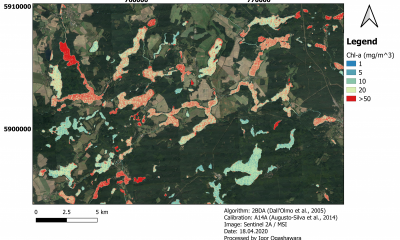
Water-ForCE Water-ForCE will bring together experts on water quality and quantity, in policy, research, engineering and service sectors to develop a Roadmap for the water component for the future Copernicus services. Contact persons Igor Ogashawara Department(s) (Dept. 3) Plankton and Microbial Ecology Start 01/2021 End 12/2023 Programme area(s)
PONDERFUL IGB (project lead Thomas Mehner) is part of a consortium that is running a new Horizon 2020 project ‘PONDERFUL’, led by the University of Vic (Spain). The project’s overarching aim is to develop improved methods for maximising the use of ponds and pondscapes in climate change adaptation and mitigation, biodiversity conservation and the delivery of ecosystem services. Contact persons Thomas Mehner Sabine Hilt Department(s) (Dept. 2) Community and Ecosystem Ecology (Dept. 4) Fish Biology, Fisheries and Aquaculture (Dept. 5) Evolutionary and Integrative Ecology Start 12/2020 End 11/2024 Programme area(s)
Long-term development of lakes as a result of climate change In this project, the effect of climate change on the physical processes of lakes will be investigated. Several lakes with a diverse set of boundary conditions (e. g. differing mean depth or different wind exposure) will be instrumented with logger chains. They will measure temperature and oxygen in high resolution and make it possible to resolve changes in physical conditions in response to varying climatic forcing. In addition to direct measurements, numerical models can be used to reproduce water temperatures in lakes. Contact persons Robert Schwefel Michael Hupfer Department(s) (Dept. 1) Ecohydrology and Biogeochemistry Start 01/2020 End 12/2025 Programme area(s)
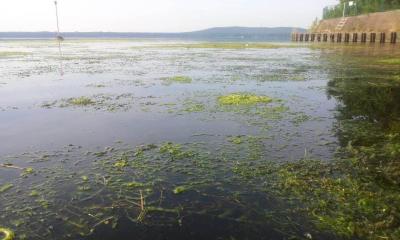
MadMacs Mass development of aquatic macrophytes – causes and consequences of macrophyte removal for ecosystem structure, function, and services Contact persons Jan Köhler Department(s) (Dept. 1) Ecohydrology and Biogeochemistry (Dept. 2) Community and Ecosystem Ecology Start 02/2019 End 10/2022 Programme area(s)
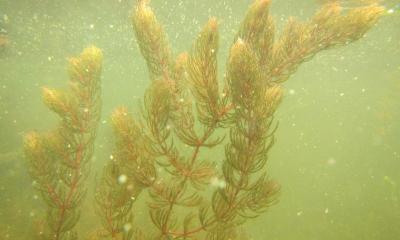
Decomposition of macrophytes We aim to unravel how C:nutrient ratios, polyphenol content and bacteria interact on macrophyte decomposition. Contact persons Sabine Hilt Hans-Peter Grossart Department(s) (Dept. 2) Community and Ecosystem Ecology (Dept. 3) Plankton and Microbial Ecology Start 05/2018 End 10/2019 Programme area(s)
CLIMSHIFT CLIMSHIFT aims for a mechanistic under-standing of stressor interactions acting on shallow aquatic systems, which are especially vulnerable to climate warming and agricultural run-off. Contact persons Sabine Hilt Franz Hölker Department(s) (Dept. 1) Ecohydrology and Biogeochemistry (Dept. 2) Community and Ecosystem Ecology Start 05/2018 End 04/2021 Programme area(s)
EUROFLOW – a EUROpean training and research network for environmental FLOW management in river basins The main objectives of this research consortium are generating an ecological knowledge base behind environmental flow management and the training of a new generation of advanced experts in this field. Contact persons Jörg Lewandowski Department(s) (Dept. 1) Ecohydrology and Biogeochemistry Start 09/2017 End 08/2021 Programme area(s)
BaltRap The Baltic Sea and its southern Lowlands: proxy – environment interactions in times of Rapid change Contact persons Michael Hupfer Department(s) (Dept. 1) Ecohydrology and Biogeochemistry Start 05/2017 End 01/2020 Programme area(s)