
Fisheries
Related News


Selected publications

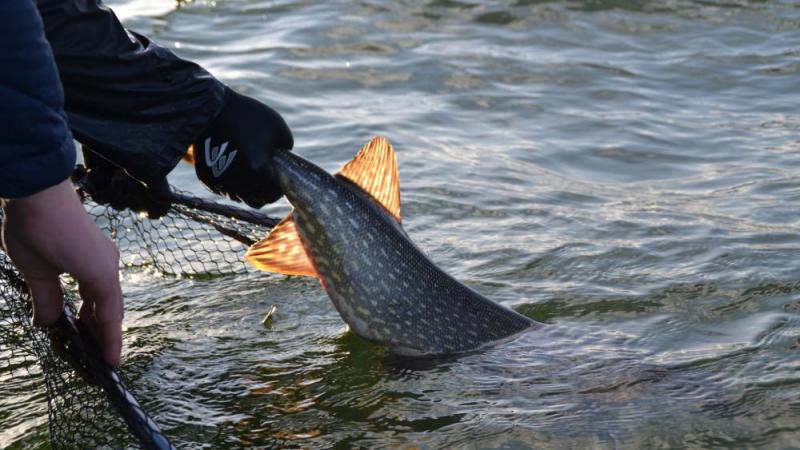
Recreational killing of wild animals can foster environmental stewardship
The authors add a new perspective to the topic of "recreational use of wild animals". The hypothesis is that an emotionally intense interaction between hunters / anglers and wild animals can create a particularly strong sense of responsibility, described as "environmental stewardship". This in turn would be an incentive for many to commit to lifelong environmental and species protection action.
Ecosystem-based management outperforms species-focused stocking for enhancing fish populations
In a large-scale effort, a research team in cooperation with angling clubs, has conducted whole-lake experiments in 20 lakes to improve ecological conditions. Habitat improvements were the most effective means to enhance fish populations, whereas fish stocking completely failed. The study emphasizes the importance of restoring habitats and improving natural ecosystem processes.
Recreational angling and spearfishing on social media: insights on harvesting patterns, social engagement and sentiments related to the distributional range shift of a marine invasive species
The authors compared ecological and social dimensions of recreational angling and spearfishing targeting the invasive bluefish (Pomatomus saltatrix) in Italy using digital videos and their associated data. The study showcases the value of exploring social media to understand the ecological and human dimensions of marine recreational fisheries in relation to distributional range shifts of species.

Evolutionary impact of size-selective harvesting on shoaling behavior: individual-level mechanisms and possible consequences for natural and fishing mortality
The authors present a multigeneration harvest selection experiment with zebrafish as a model to understand the effects of size-selective harvesting on shoaling behavior. Using high-resolution tracking of fish behavior with computational agent-based modeling, they show that shoal cohesion changed in the direction expected by a trade-off between individual vigilance and the use of social cues.

Big-data approaches lead to an increasedunderstanding of the ecology of animal movement
The authors present methods that combine high-resolution tracking technologies with Big Data analyses to investigate the movements of fish and other animals. Through high resolution tracking the effects of environmental and climate changes on wildlife can be better understood, and nature and wildlife conservation be advanced on this basis.