Filter for Search for news Programme area Programme area1) Biodiversity in a Changing World2) Ecosystem Services for a Sustainable Future3) Dimensions of Complexity of Aquatic Systems4) Predictive Ecology in the Anthropocene Topic TopicAdaptation and evolutionFreshwater habitatsClimate and environmental changePollutants and matter cyclesWater in the landscapeFreshwater management and conservationFisheriesFish behaviour and swarm intelligence Format Formatpress releaseinsightshort newsfocus Apply 231 - 240 of 271 itemsFormat:press release 16 October 2018 press release Fish undisturbed by flash photography A team of scientists spearheaded by IGB has investigated whether flash photography induces an increase in cortisol levels of fish in aquariums. 21 September 2018 press release Light pollution makes fish more courageous Artificial light at night also makes guppies more courageous during the day, according to a behavioural study led by researchers from IGB and the Max Planck Institute for Human Development. 10 September 2018 press release Greenhouse emissions from Siberian rivers peak as permafrost thaws Permafrost soils store large quantities of frozen carbon and play an important role in regulating Earth’s climate. River greenhouse gas emissions are highest in areas where Siberian permafrost is actively thawing. 5 September 2018 press release Reducing nitrogen inputs prevents algal blooms in lakes Scientists from IGB have analysed long-term data to prove that decreasing nitrogen in Berlin’s Lake Müggelsee is the key to reducing algal blooms in summer. 3 July 2018 press release Spearfishing makes fishes more timid Fisheries scientists have studied the response of fish in the Mediterranean Sea to spearfishing. The fish are able to finely discriminate if divers carry a speargun or not and adjust their escape behaviour. 19 June 2018 press release Light pollution a reason for insect decline!? Climate change, pesticides and land use changes alone cannot fully explain the decline in insect populations in Germany. Artificial lighting at night could be another reason for declining insect populations. 5 June 2018 press release What the size distribution of organisms tells us about the energetic efficiency of a lake The relationship between energy efficiency in the food web and size distribution allows a better and more direct understanding of biological processes and disturbances that impact aquatic ecosystems. 23 May 2018 press release Genetic diversity helps protect against disease Diversity is the key: IGB researchers have demonstrated experimentally that genetic diversity makes populations more resistant to disease. 26 April 2018 press release When lakes start to sweat Rising temperatures are a threat to the balance of lakes. In a new IGB Dossier, researchers provide a summary of the changes that lakes are already undergoing and of the scenarios that are likely to occur. 19 February 2018 press release Distantly related Researchers have just published an extensive phylogenetic tree for the Eurasian green toads. This phylogenetic tree shows that polyploid species are hybrids and only descend from parental species with a very high degree of genetic divergence. Pagination First page « First Previous page ‹‹ … Page 22 Page 23 Current page 24 Page 25 Page 26 … Next page ›› Last page Last »
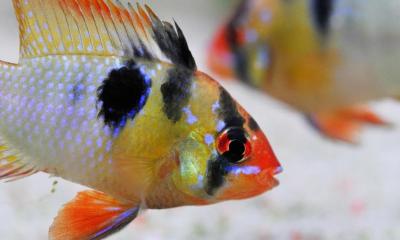
16 October 2018 press release Fish undisturbed by flash photography A team of scientists spearheaded by IGB has investigated whether flash photography induces an increase in cortisol levels of fish in aquariums.
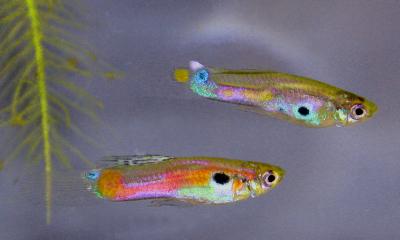
21 September 2018 press release Light pollution makes fish more courageous Artificial light at night also makes guppies more courageous during the day, according to a behavioural study led by researchers from IGB and the Max Planck Institute for Human Development.
10 September 2018 press release Greenhouse emissions from Siberian rivers peak as permafrost thaws Permafrost soils store large quantities of frozen carbon and play an important role in regulating Earth’s climate. River greenhouse gas emissions are highest in areas where Siberian permafrost is actively thawing.
5 September 2018 press release Reducing nitrogen inputs prevents algal blooms in lakes Scientists from IGB have analysed long-term data to prove that decreasing nitrogen in Berlin’s Lake Müggelsee is the key to reducing algal blooms in summer.
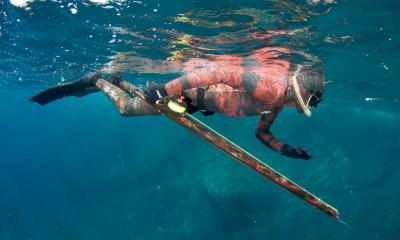
3 July 2018 press release Spearfishing makes fishes more timid Fisheries scientists have studied the response of fish in the Mediterranean Sea to spearfishing. The fish are able to finely discriminate if divers carry a speargun or not and adjust their escape behaviour.
19 June 2018 press release Light pollution a reason for insect decline!? Climate change, pesticides and land use changes alone cannot fully explain the decline in insect populations in Germany. Artificial lighting at night could be another reason for declining insect populations.
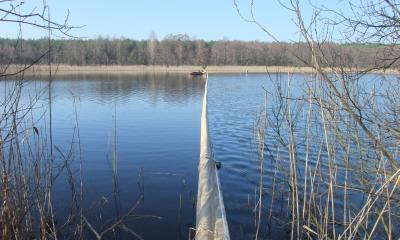
5 June 2018 press release What the size distribution of organisms tells us about the energetic efficiency of a lake The relationship between energy efficiency in the food web and size distribution allows a better and more direct understanding of biological processes and disturbances that impact aquatic ecosystems.
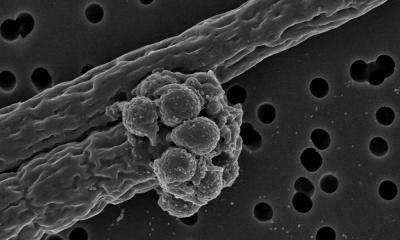
23 May 2018 press release Genetic diversity helps protect against disease Diversity is the key: IGB researchers have demonstrated experimentally that genetic diversity makes populations more resistant to disease.
26 April 2018 press release When lakes start to sweat Rising temperatures are a threat to the balance of lakes. In a new IGB Dossier, researchers provide a summary of the changes that lakes are already undergoing and of the scenarios that are likely to occur.
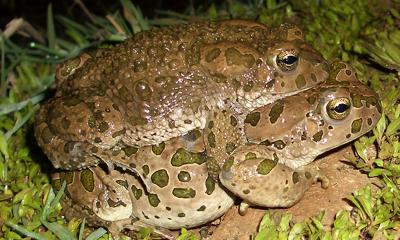
19 February 2018 press release Distantly related Researchers have just published an extensive phylogenetic tree for the Eurasian green toads. This phylogenetic tree shows that polyploid species are hybrids and only descend from parental species with a very high degree of genetic divergence.