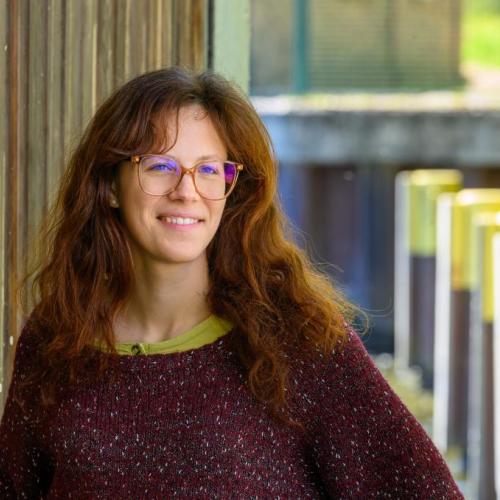

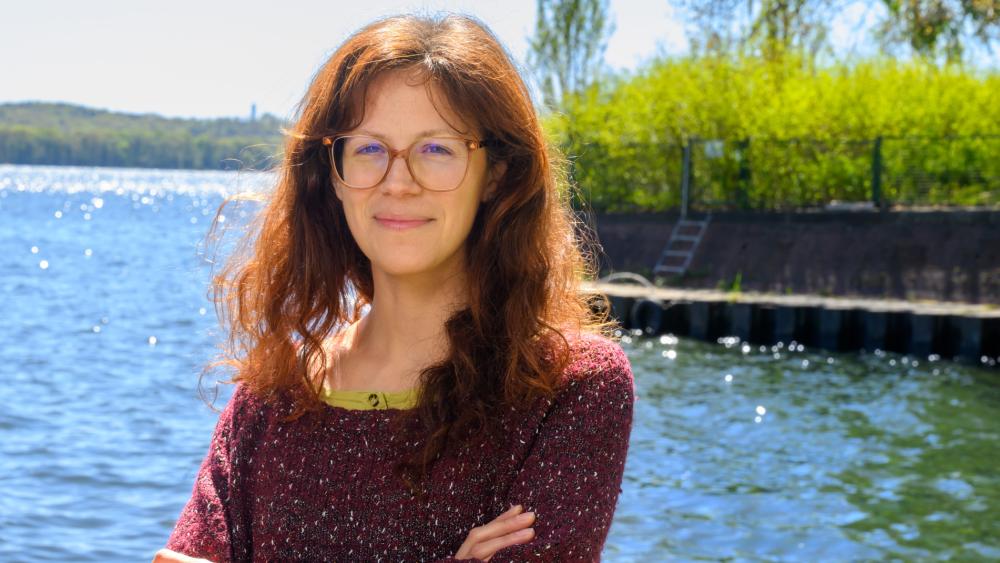
Daphne Cortese, leader of the new research group "Fish Ecophysiology". | Photo: David Ausserhofer
Mrs. Cortese, you are studying how environmental factors and interactions between animals affect the physiological functions of fish, and aim to expand your research on these interactions. Why do you find fish in their natural habitat such a fascinating subject of research?
Since I first started observing fish underwater, I was hooked. Fish are fascinating because of their incredible diversity in morphology, physiology and behavior, and the ways they interact with both their environment and other animals sharing their habitat. With almost 40 thousand fish species, they occupy a wide range of habitats and ecological role. Many are social and live in groups, while other are solitary. Several can be both predators and prey, and some even change their role within their community as they grow. They are adapted to environments ranging from clear, oxygen-rich rivers to murky low-oxygen waters or open water oceans, and these different conditions shape how their body function, i.e. their physiology. Fish are particularly fascinating because their physiology is tightly linked to their environment. As most fish are poikilothermic, fluctuations in water temperature directly affect their metabolism, behaviour, growth, and reproduction. This makes them excellent models for understanding how animals respond to environmental change. At the same time, this close dependence on their environment also makes them particularly vulnerable. Indeed, fish are highly affected by human activities, including climate change, pollution, habitat degradation, and exploitation through fisheries and recreational activities. Understanding how they respond to these pressures is therefore not only scientifically fascinating but also essential for their conservation and the management of water ecosystems.
You have a background in marine science. What do you think distinguishes research in that field from research on inland waters?
The biggest difference is the environment that fish have adapted to. Marine and freshwater ecosystems differ in their water chemistry, spatial scale, connectivity, and environmental variability, which shapes the ecology and physiology of the species living there. I was surprised by how dynamic inland waters can be. For example, the water temperature in ponds and shallow lakes can change by several degrees within just a few hours or days, especially during heatwaves. In the ocean, temperature changes are usually much slower because of its much larger volume, so fish experience environmental change very differently. From a research perspective, freshwater systems also have some practical advantages—for example, the equipment corrode much less because of the lower salinity.
Right from the start at IGB, you got involved in a science-art project with “FrauVonDa.” What did you take away from that experience?
It was a very interesting experience! I first had the opportunity to participate in the art-project “OderHive” in Szczecin, at the mouth of the Oder River. After the first event, I quickly became involved in a second project “Rivers in Times of War and Peace” in Berlin. Before joining, I had never experienced a format that combined science with live music and artistic performance. It immediately sparked my curiosity and turned out to be a truly multisensory experience. The combination of electronic music, video projections, and natural water sounds made me travel through inland waters while communicating the urgency behind the scientific topics. I was surprised by how the artistic atmosphere blended with the scientific intervention and audience interaction.
One of the most rewarding aspects was the interaction with the audience. Their thoughtful and unexpected questions made me reflect on the value of communicate science in ways that invite curiosity and dialogue. The project also brought together researchers from different disciplines, from ecology and biology to philosophy and sociology, and from institutions across Berlin and Szczecin. It was inspiring to hear perspectives beyond my own area of expertise and to see how different disciplines contribute to a broader understanding of rivers and their challenges.