1) Biodiversity in a Changing World
How freshwater life responds to multiple challenges



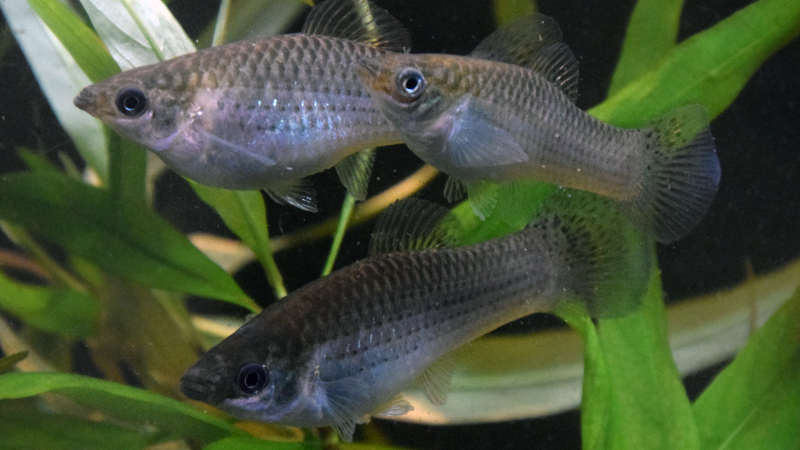
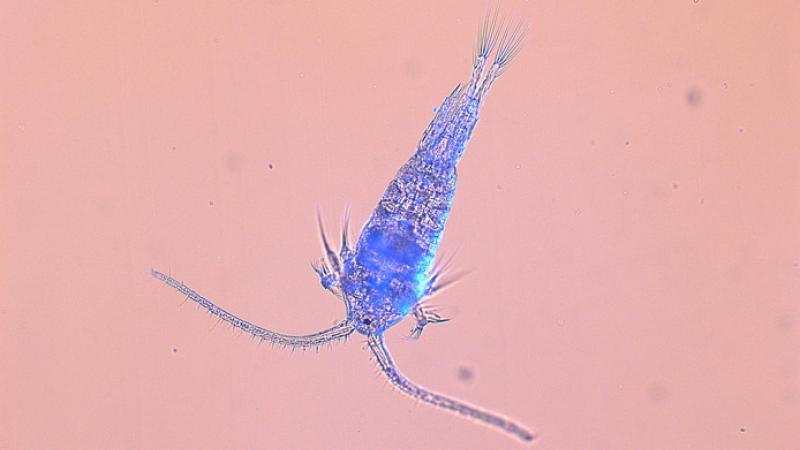
Countless organisms live on our planet. However, this biodiversity is threatened by human dominance. In particular, genetic diversity, species diversity and ecosystem diversity are affected. The main reasons for the rapid decline in biodiversity are climate change, large-scale land-use change, direct exploitation, pollution and the spread of invasive alien species. Freshwater species – from larger animals (“megafauna”), fish, amphibians, invertebrates, macrophytes to a variety of microorganisms (e.g. plankton, bacteria, fungi and viruses) – are particularly affected by these pressures. In this context, aquatic biodiversity contributes to the stability and resilience of ecosystems in the context of global change, and plays a central role in important ecosystem services such as water purification, food supply and recreational opportunities.
In the programme area “Biodiversity in a Changing World”, IGB engages in research on the drivers and implications of biodiversity loss and on how biodiversity can be conserved. The focus is on lakes, rivers and wetlands in general, including small freshwater habitats such as ponds and streams, as well as feedback mechanisms between aquatic and terrestrial systems.

The study shows: Only 25 per cent of newly-delineated priority areas identified for the protection of freshwater fishes in Colombia overlap with existing protected areas. Strikingly, the required amount of area is similar to that of the existing protected areas. However, a more efficient spatial distribution would be important.
The Nature Restoration Regulation (NRR) calls for restoring at least 25,000 kilometres of free-flowing rivers by 2030. Translating this ambition into implementation remains challenging due to differing restoration priorities across ecological, social, economic and governance contexts. This study offers a roadmap to support the implementation of the NRR's goal of restoring free-flowing rivers.

This study shows: Over 40 percent of extant large freshwater animals (megafauna) have been deliberately introduced outside their natural ranges, often for economic gain. While these alien species can provide substantial benefits to certain groups in the introduced regions, they also posed profound and often underestimated risks to native biodiversity and local people.

Oceans are important carbon sinks. Bacteria play a central role in carbon cycling because, collectively, they convert more organic material than all other marine organisms combined. Their activity acts as a “carbon pump”, ensuring that life is possible in the deep sea. The authors quantified the effect of bacteria in the middle ocean layers, known as the twilight zone, in the North-East Atlantic.
In stream mesocosm experiments the authors tested how reduced flow and a sequence of controlled flushing events, with or without macroinvertebrates, affect periphyton community composition, algal biovolume, and ecosystem metabolism. Flow variability and macroinvertebrates control periphyton structure, metabolism, and carbon cycling, with macroinvertebrates stabilising responses to disturbance.