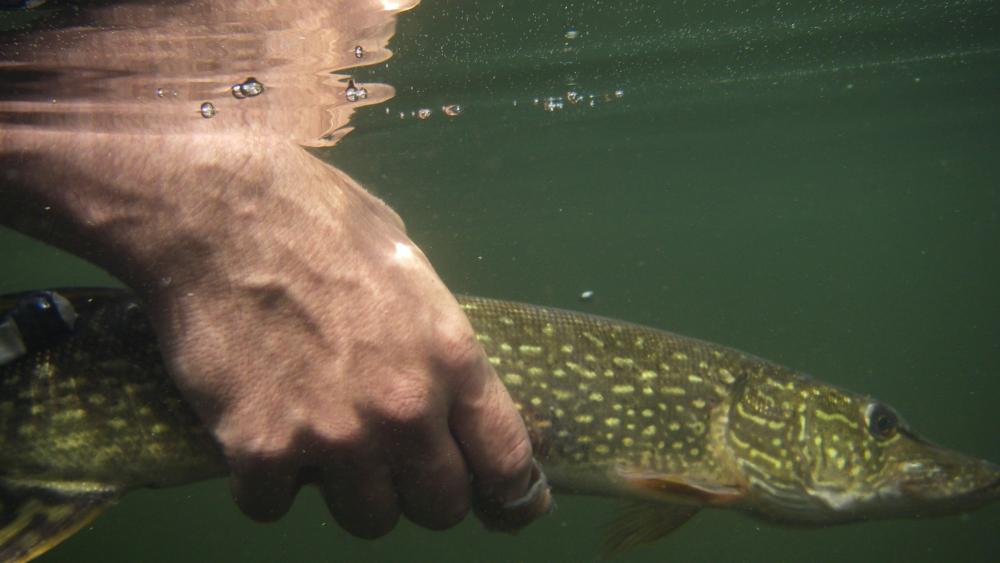
An undersized pike is being released. | Picture: Thomas Klefoth
The IGB’s ‘Waidgerecht’ project is addressing this issue. To ensure that the findings can be put into practice by anglers, the team has produced a video setting out eight science-based basic rules for the humane release of fish. The video series will be gradually expanded to include species-specific information and recommendations.
The project is ethically neutral; in other words, it does not take a stance on whether catching and releasing fish is morally acceptable or not. Instead, it addresses the objective scientific question: if, for whatever reason, fish are caught and released, how can this practice be carried out in a way that is fair to the fish, minimises harm and is sustainable, and what do anglers need to bear in mind for each species?
"Anglers still have enormous scope for action here, which can make or break their success, and which is currently either unknown in practice or not yet being utilised to its full potential," explains project leader Prof. Robert Arlinghaus.
The eight basic rules, which are explained in detail in the video, are as follows:
- Fish in cooler conditions
- Fish shallower
- Avoid deep hooking
- Minimise stress
- Spare eyes, mucous membrane and gills
- Minimise air exposure
- No use of holding devices
Change the fishing spot if lots of spared fish are biting
Please scroll down to watch the video (in German, automatic translation/subtitles available).