


Prediction of Hydroclimatic Anomalies Using a New Isotope Precipitation Index
The authors used stable water isotopes to trace the origin of precipitation and are developing a new, isotope-based Evaporation and Moisture Recycling Index (iEMI). The iEMI can identify anomalous dry periods and links evaporation-driven precipitation to droughts in Europe, Africa, and Australia. This innovative index can help improve drought monitoring and optimize water management worldwide.

Unravelling the Role of Surface Water–Groundwater Connectivity in the Andean Páramo
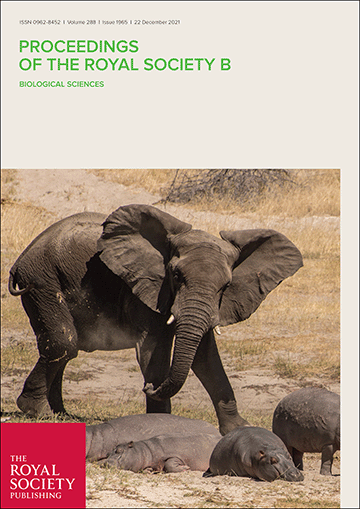
Strategic choices of attack location allow predators to counter a collective prey defence
Shoals of sulphur mollies blanket the water surface of toxic sulphur springs in Mexico. The tiny fish survive attacks of birds through creating collective waves. New research now shows that their avian predators are adapting too, changing where they attack to avoid triggering the fish’s powerful group defence. The fish, in turn, appear to fight back with a surprising form of collective “memory.”

N-Ethyl Perfluorooctane Sulfonamide (N-EtFOSA) Exposure Alters Microbiome Composition and Causes Microbiome-Dependent Behavior Effects in Larval Zebrafish
Effects of temporary streamflow interruption on hyporheic oxygen dynamics
This study provides high-resolution, field-based evidence of the importance of accounting for short-term flow interruptions in river management strategies. It demonstrated that a one-day streamflow interruption of the side channel of the River Erpe caused a significant decrease in diel surface water oxygen amplitude and porewater oxygen concentrations, as well as a metabolic shift after rewetting.

Quantifying and categorising the animal welfare impacts caused by biological invasions
Through competition for food or attacks, invasive species can cause severe suffering to native wild and farmed animals, but they can suffer too. The authors present a framework which can be used to identify and assess the animal welfare impacts of biological invasions.
Enhancement of Hyporheic Flow and Solute Transport by Random Burrow- and Mound-Induced Bioturbation
This study examined how bioturbation alters sediment structure and surface roughness, and how this influences hyporheic exchange and biogeochemical processes. It reveals that irregular burrow galleries promote deeper and spatially heterogeneous solute penetration by generating tortuous and highly connected flow paths within the sediment.

Harnessing the power of machine and deep learning for transferring joint species distribution models considering the structure of biotic interactions

The Spatial Discrepancy Between Colombian Freshwater Fish Suitable Habitats and Existing Protected Areas
The study shows: Only 25 per cent of newly-delineated priority areas identified for the protection of freshwater fishes in Colombia overlap with existing protected areas. Strikingly, the required amount of area is similar to that of the existing protected areas. However, a more efficient spatial distribution would be important.