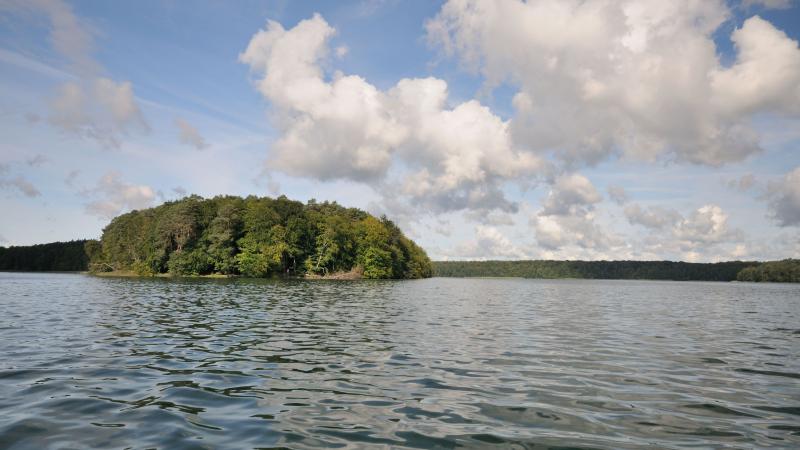

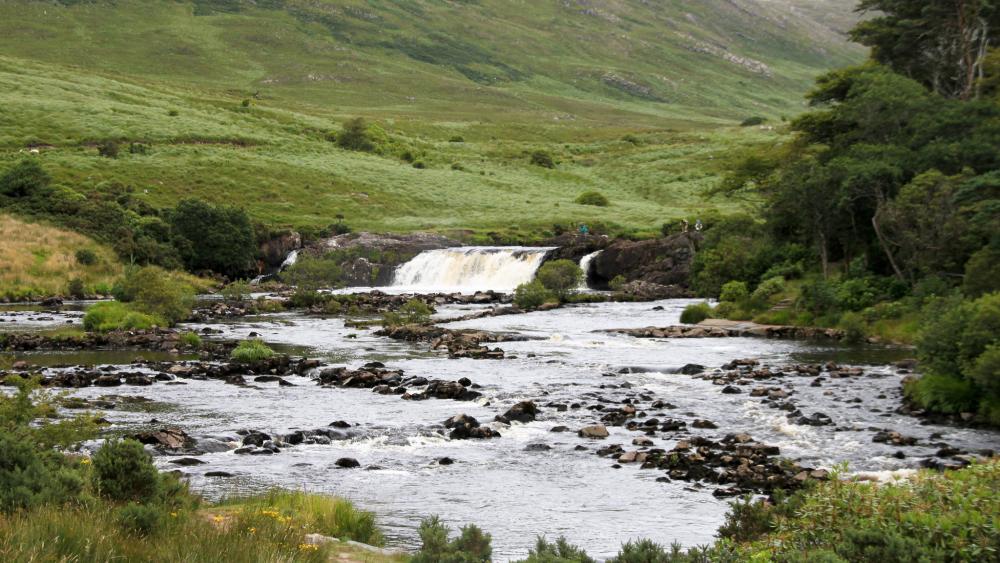
River in Ireland. | Photo: Markus Venohr
The researchers investigated how the diversity and composition of river organisms – especially small invertebrates such as insects and mussels – have developed in protected and unprotected areas. These so-called bioindicators show how healthy a river is. In most cases, no difference could be observed between protected and unprotected waters. For already high-quality, i.e., relatively clean, rivers, protection had hardly any measurable effects – presumably because these waters are already relatively unpolluted. Moderately or slightly polluted rivers, on the other hand, were only marginally improved by existing protected areas. Only heavily polluted rivers benefited, and only provided that protections encompassed large upstream sections of the river course and its tributaries.
Numerous protected areas originally designated for terrestrial ecosystems and biodiversity
The authors emphasize that many protected areas were originally designated for terrestrial ecosystems – such as forests or habitats of rare birds and mammals. Rivers and their ecological characteristics were often overlooked in the process. As a result, pollutants or agricultural runoff from outside the protected areas can still enter the waterways. The study also points out that many protected areas still allow human use – such as agriculture or forestry. This can limit their benefits for rivers.
It is not only the size of the protected areas that counts
With regard to international biodiversity targets – such as the agreement to protect at least 30 percent of the Earth’s surface by 2030 – the study shows that purely area-based targets are insufficient if the quality and design of the protection measures are inadequate. The research team therefore advocates for a holistic approach to water protection planning in the future. “The connectivity of rivers is of central importance here. Instead of individual, small protected areas, large portions of the entire catchment area of a river must be considered – from its source to its mouth. This includes riparian zones, tributaries, and adjacent landscapes”, said Dr. Sami Domisch, IGB scientist and co-author of the study.
Future conservation strategies should therefore include measures against pollution, sustainable land use, and the restoration of natural river courses. Only in this way can protected areas achieve their full effect for the waters and their valuable ecosystems.
The text is based on the press release by the Senckenberg Nature Research Society >
The study used data from Hydrography90m, a detailed map of the global river network that Sami Domisch developed together with other researchers from IGB and Yale University >