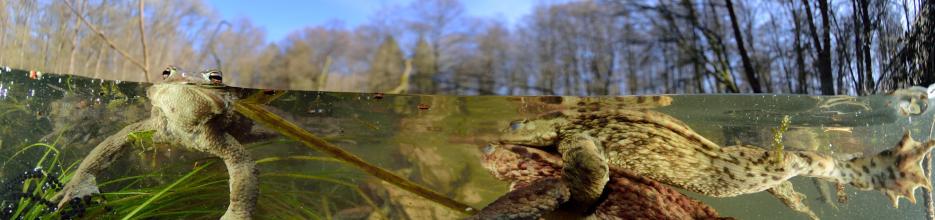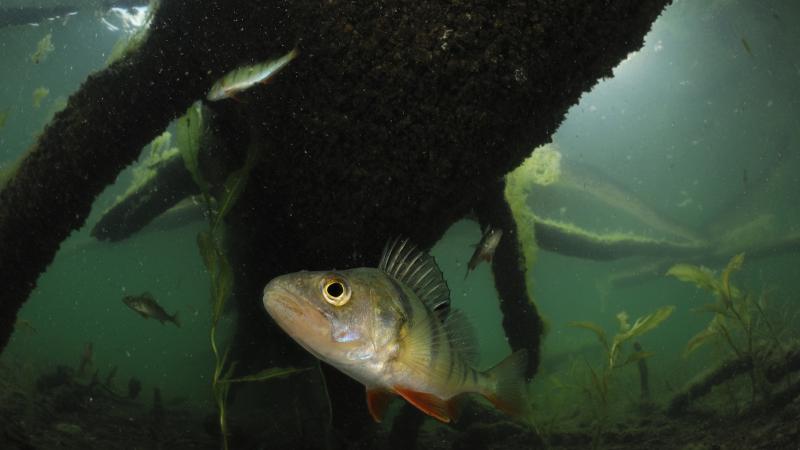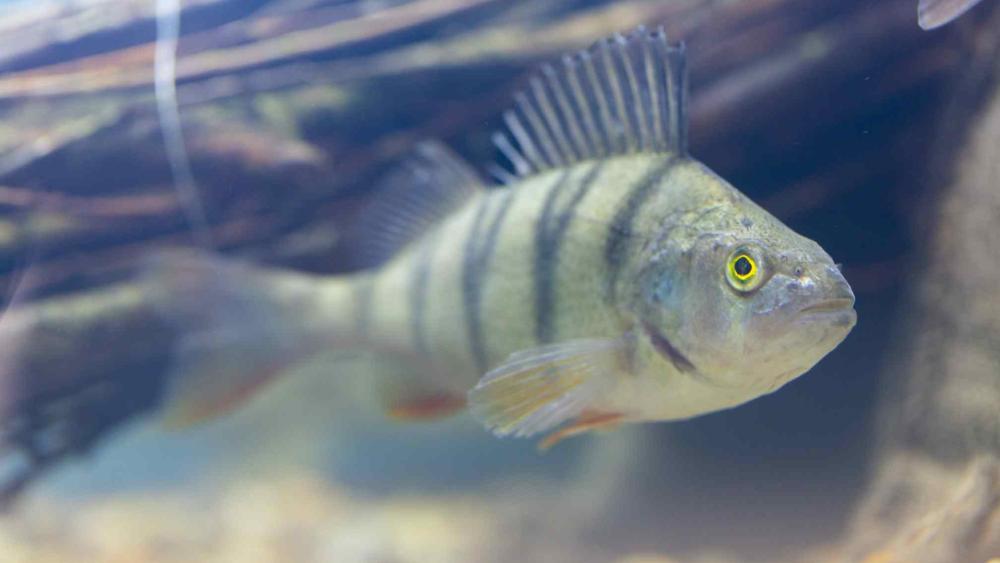
The perch does not need to drink any water at all to maintain its fluid balance – quite the opposite. | Photo: Florian Möllers, AVN
Do you remember the topic of "osmosis" from your physics or chemistry lessons? Particles moving through a membrane? We need to bear this phenomenon in mind before we can clarify whether fish drink. If two liquids are separated by a permeable membrane, water flows in one direction or the other until the salinity on both sides of the membrane is the same. In the case of fish, the membrane is their skin, and the compartments containing the two liquids are, on one side, their body cells and, on the other, the water in which they swim.
Fish cells naturally have the same salt content; it therefore depends on where the fish are living
Freshwater fish swim in an environment that is less salty than their body. They therefore do not need to actively take in water by drinking, as it flows into them naturally via their gills and skin. Freshwater fish therefore do not feel ‘thirst’. However, they actively absorb salts and ions from their surroundings via their food and gill cells, whilst their kidneys are designed to retain salt. Consequently, they excrete the water that has flowed in as highly diluted urine; in the case of eels, it is known that this can account for around 30 percent of their body weight each day.
The situation is different for saltwater fish. Their environment is saltier than their body tissues. Their bodies therefore lose a great deal of fluid to the environment. To prevent dehydration, saltwater fish must drink plenty of water. Furthermore, their kidneys are designed to conserve water, which is why they excrete small amounts of highly concentrated urine. The excess salt from seawater is also absorbed via the intestines and transported via the blood to the gills. There, it is pumped back out via specialised chloride cells.
A sudden change of environment would be fatal
If a saltwater fish were placed in freshwater, the influx of water would cause the pressure inside its cells to rise dramatically. The cells would burst and the organs would be destroyed. Freshwater fish, on the other hand, would lose water very quickly in saltwater; their cells would collapse and the fish would die of dehydration.
Migratory fish must significantly adapt their drinking behaviour
However, there are species of fish that can adapt to both salt water and fresh water. Migratory fish, in fact, make use of both habitats: one to give birth to their young, the other to grow and develop. Among the best-known migratory fish are salmon, sturgeon and eels. When migrating between fresh and salt water, these fish must significantly adapt their drinking behaviour and fundamentally adjust their salt and water permeability, as well as the mechanisms of salt regulation in their gastrointestinal tract, kidneys and gills. For example, the direction of the salt ion pumps in the gill cells is reversed depending on the environment. In the kidneys, filtration capacity and urine production are regulated as required. However, this takes time. Various hormones control these adaptations within the body. In marine fish, cortisol promotes salt excretion via the gills, whilst a growth hormone [somatotropin?] also plays a role. In freshwater fish, on the other hand, prolactin promotes ion uptake and water retention. As a reminder: cortisol is known in humans as the ‘stress hormone’ and it also influences the water and mineral balance in humans and mammals; prolactin is responsible for milk production in both. Many of the body’s functions in fish are therefore not all that different from our own.
Before migrating to salt water, the salmon undergoes significant physical changes – and then it’s time to drink plenty!
The fish prepare for their migrations. The Atlantic salmon, for example, migrates from fresh to salt water at around two years of age. Before that, it undergoes a radical transformation akin to metamorphosis. During this so called smoltification, the larva’s organs are completely reabsorbed or shed, allowing the organs of the adult fish – which were already laid down in the early stages – to develop further until they are fully functional. In salmon, this comprehensive transformation is known as smoltification. During this process, the body shape becomes more streamlined and the hormonal balance changes – more cortisol and growth hormone are produced, whilst prolactin levels decrease. The latter prepares the gills, kidneys and intestines for adaptation to the salty environment. The increasing length of daylight and rising water temperature from late winter to late spring signal the start of the journey. And then it’s time to drink plenty! The reflex to drink seawater is stimulated by the chloride ions in the salt water and occurs immediately upon entering the new environment.
Interestingly, if the salmon does not migrate into salt water after all – for example, because a dam prevents it from doing so – its tolerance to salt water decreases again within a few days to the level it was at before the major physical transformation.
Incidentally, the adaptation of returning salmon to freshwater for spawning has been less well researched. However, this physical transformation is nowhere near as pronounced as that of fish larvae.
The eel – the greatest long-distance migrant; life in the sea does not come easily to it
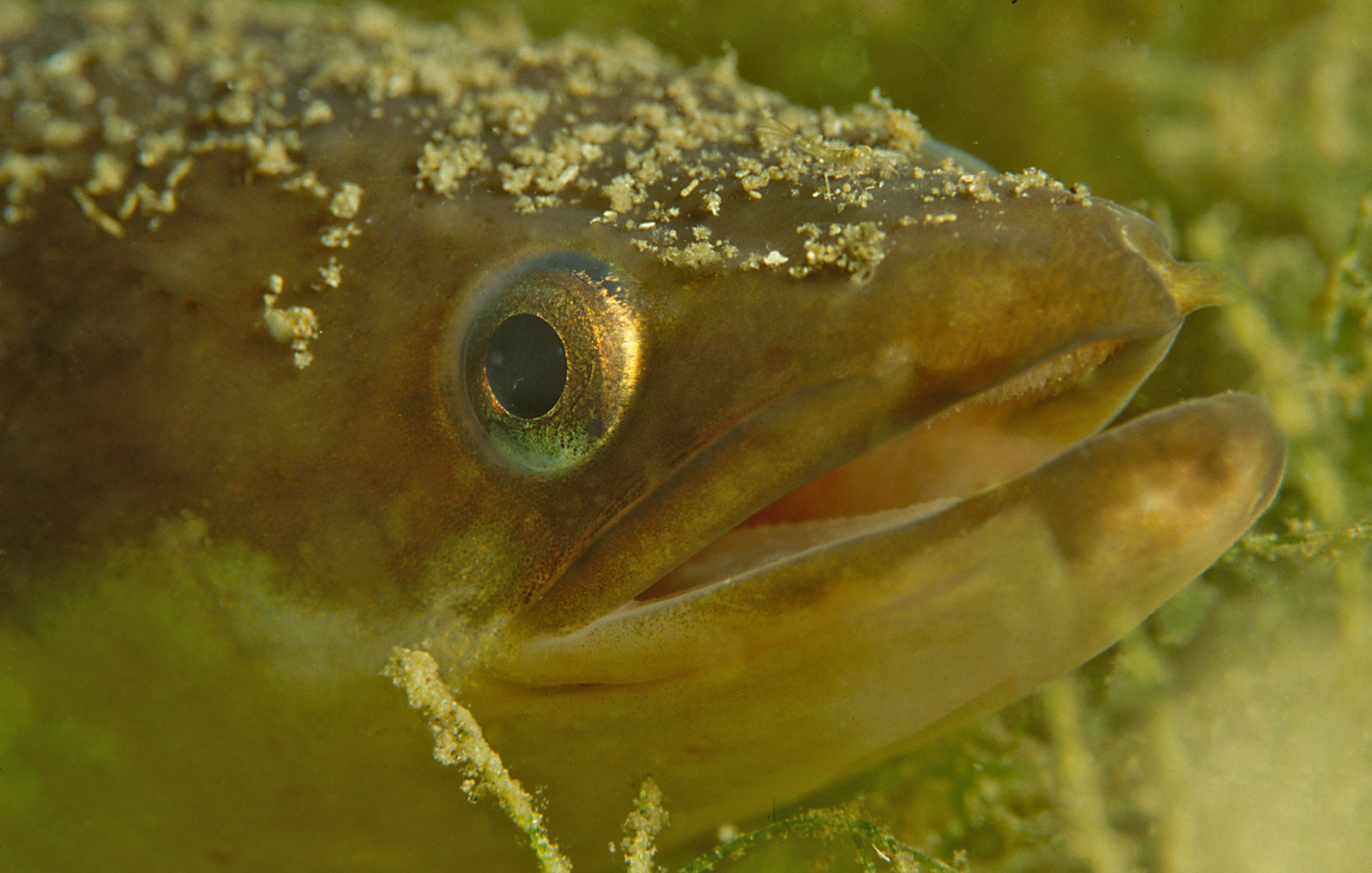
Photo: Michael Feierabend
With the European eel, the situation is the reverse of that with the salmon: as an adult, it lives in the rivers of Europe and North America and migrates some 6,000 kilometres to the Sargasso Sea in the Atlantic to spawn. It is only in recent years that the migratory behaviour and the previously mysterious life cycle of these fish have been fully understood. Studies in which glass eels were subjected to a rapid transition from seawater to freshwater show that the young eels, known as glass eels, appear to adapt to freshwater quickly and without a lengthy acclimatisation period. In contrast to true marine fish, however, the returning adult eels are not as well adapted to seawater in terms of salt excretion and water retention in the body.
And marine mammals?
Dolphins, whales and seals do not drink regularly; they also use the body fluids of their prey to quench their thirst. However, they can also drink salt water without it placing a strain on their bodies. Like saltwater fish, they produce much more concentrated urine in their kidneys. This allows them to excrete excess salt more easily, without the risk of dehydration.
***
More information on how fish adapt to salt- and freshwater
- There are around 32,000 species of fish; roughly half of these live in fresh water, and the other half in salt water. Around 5 per cent of all fish species are euryhaline; they can survive in both fresh and salt water, with many of them inhabiting coastal areas, for example. Only around 250 species of euryhaline fish are diadromous, i.e. ‘true’ migratory fish that swim back and forth between freshwater and marine habitats once or several times during their lifetime. Among diadromous fish, there are those born in fresh water, such as sturgeon and salmon. These species are called anadromous. Catadromous fish, such as the eel, are born in salt water and live in fresh water as adults. This form of migration is less common.
- Such a significant difference in salinity: the osmotic concentrations of fresh water and seawater differ considerably. Fresh water has a salinity of less than 1 per mille (around 10 mOsm/kg), whilst seawater has a salinity of around 35 per mille (over 1000 mOsm/kg). Most fish maintain the balance of their internal osmotic concentration at around 350 mOsm/kg, which corresponds to one third of the value found in seawater.
- Why has evolution produced migratory fish? The two most widely discussed hypotheses explaining the evolution of diadromy are the ‘productivity hypothesis’ (Gross, 1987; Gross et al., 1988) and the ‘safe-site hypothesis’ (Dodson et al., 2009). The productivity hypothesis focuses on the selective advantage of migrating to areas with increased food availability, enabling individuals to achieve higher growth rates and, presumably, greater fitness. The ‘safe-site’ hypothesis (Dodson et al., 2009) posits that freshwater habitats are safer for spawning and the early development of fish due to a lower risk from predatory fish – from this perspective, freshwater is regarded as a refuge from marine predators. This hypothesis could explain the emergence of anadromy in some originally marine species. In many northern latitudes, repeated glacial advances and retreats (as recently as 10,000 years ago) led to the formation of new freshwater habitats. These new freshwater systems, created by glaciers, initially had little or no competition or predators, which enabled successful colonisation by euryhaline species from the sea.
- Why do fish migrate in both directions, even though the ‘productivity hypothesis’ holds true? In fact, tropical migratory fish, such as many species of eel, tend to be catadromous. They seek out freshwater to grow and thrive, as this is generally richer in nutrients than marine environments in the tropics. In temperate latitudes, the situation is different: here, sturgeon and salmon find better conditions for growing to maturity in the sea. That, at least, is the scientific theory.