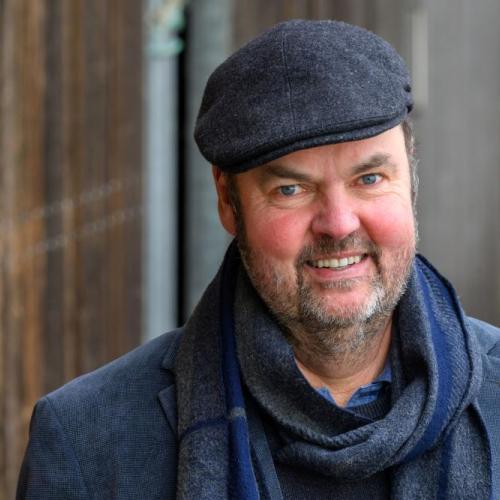


Michael Hupfer is the new president of the German Society for Limnology. | Photo: David Ausserhofer
Mr. Hupfer, congratulations on your election as DGL president. In your own words, what makes the DGL unique to you personally?
The DGL actually plays a very important role in my life. I have been a member for more than 30 years, including six years on the executive committee. When I joined, the society was only ten years old. Even then, I was impressed by the fact that the DGL offers a platform for lively and stimulating exchange between science and practice and is united by its joint efforts to protect and preserve water bodies and water resources. For us and other research institutes, it offers a unique opportunity for knowledge transfer. The DGL is a very dynamic and discussion-oriented society in which even controversies are conducted respectfully. This spirit ensures that we do not become “dusty.” This is also reflected in the rising membership numbers. Young people in particular continue to have a keen interest in establishing their networks there.
So you are taking over a well-functioning organisation. Nevertheless, do you have any ideas that you would like to implement in your new role?
Yes, I am certainly following in some very big footsteps. Many tasks need to be continued successfully. One of the most important is the organisation of the next annual conference in Berlin in September, which will be held in conjunction with the Water Science Alliance conference for the first time. Additionally, the executive committee has already planned to expand our advisory services to authorities and political stakeholders. We recently adopted guidelines for establishing working groups. These groups will discuss highly relevant societal topics and provide consulting services, for example through workshops, positions papers or informal exchanges. Topics will include the thermal use of water bodies and the preservation of small water bodies, for example. In this way, we aim to contribute more momentum as a partner in management recommendations and decision-making processes.
You already mentioned that you have no concerns about finding young talent for these important tasks. How are people involved in the DGL?
Yes, our program for promoting young talent is going very well. Every year, we award the DGL Young Talent Prize. The three winners give a plenary presentation at the annual conference and publish their research findings in an applied journal, making them accessible to a broader specialist audience We also offer “getStarted” projects and travel grants to support early-career researchers. At the same time, we have many long-standing members whose expertise is irreplaceable for us. After all, the diverse challenges facing water bodies today are not entirely new. We therefore aim to preserve and expand the wealth of experience and knowledge within the society. One of our priorities is therefore to establish support instruments for senior members, also in the interests of diversity.
You just briefly mentioned the challenges facing our waterways. What exactly are they? And are there any rays of hope, i.e. things that have improved for our freshwater ecosystems in recent decades, perhaps even under the influence of science?
Many challenges have become more acute. Water-related disasters are on the rise, as are chemical pollution and the unauthorized use of water resources. In our region, we have particularly low levels of precipitation. Much of this has been known for a long time, but it often fails to receive adequate attention in management and politics. That can be frustrating. In my experience, what helps is taking a clear position and persistently advocating for an issue. One should not give up to quickly, build trust, and support experts in the authorities. This require time and commitment from the scientist – efforts that are largely invisible in the current scientific system and are rarely rewarded. As a result, this kind of long-term engagement is sometimes lacking. I fully understand why early-carreer researchers in particular, who are in an uncertain career situation, may hesitate to take on this responsibility. Nevertheless, t science must not slacken in its efforts. One example where I feel I could make a meaningful contribution through the DWA working groups or the LAWA, the Federal State Working Group on Water. For me, these structures are a ray of hope because, like the DGL, they promote the cooperation between practise and science.
Finally, a personal question: Why did you become a water researcher?
For me, it was largely the people who mentored and inspired me. After finishing high school, I completed a two-month internship at the IGG, one of the predecessor institutions of the IGB. Brigitte Nixdorf was a doctoral student and I was given the opportunity to assist her with measurements of primary production. Her enthusiasm had a lasting impact on me, and we stayed in touch even after the internship. I also felt that there was a very collegial atmosphere in this research discipline. The final decision came during a research stay in Switzerland, where I investigated the effects of aeration on Swiss lakes. Later, I was able to combine my interest in science and practice at the UFZ through projects on the flooding of mining lakes and mainly, during my 30 years at the IGB, on the eutrophication of lakes and the influence of climate change. Today, I try to pass on the excellent support I received as a young scientist in all these projects.