
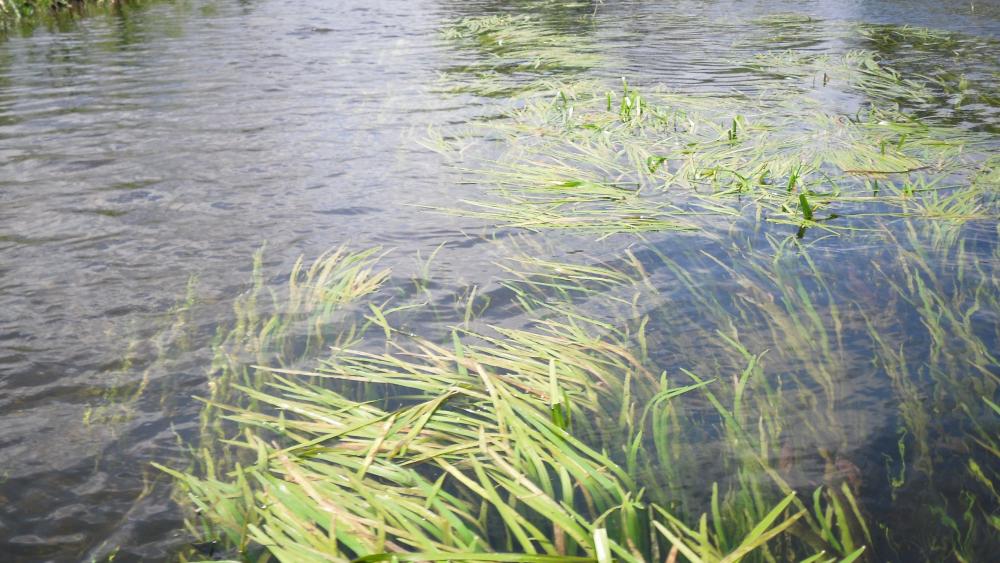
The green in the blue: aquatic plants in the Spree River. | Photo: Jan Köhler
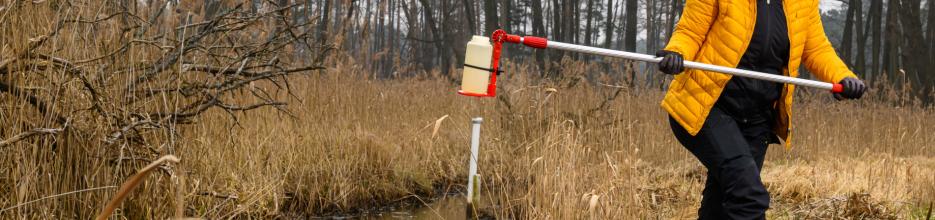
The IGB research team examined long-term data on discharge, water level and macrophyte biomass in a 32.4 kilometre section of the Spree River, located southeast of Berlin, between the Große Tränke weir near Fürstenwalde and Lake Müggelsee. The scientists quantified the impact of the aquatic plants on the river's flow and demonstrated that dense stands of aquatic plants narrow the flow cross section and increase the hydraulic roughness. This causes the water level to rise at a given discharge.
Positive impounding effect: Although the discharge volume fell by almost half, the water level remained constant
In recent summers, aquatic plants have caused the water level to rise by around 50 to 60 centimeters compared to before the year 2011. As a result, the mean water level remained constant, even though the study shows that the discharge has declined by almost 50 percent since the 1980s. The reasons for this are the closure of large-scale opencast lignite mining, the subsequent flooding of the opencast mines, and increased evaporation from the large new mining lakes, streams, and vegetation in the Spreewald.
“Aquatic plants offer a nature-based solution for stabilising water levels, particularly for the Spree River, which is affected by water shortages following the end of opencast mining in Lusatia. According to calculations by the German Federal Environment Agency (UBA), the river will carry up to 75 per cent less water locally by 2038“, explained Dr Jörg Lewandowski, author of the study. “The most substantial growth of aquatic plants occurs from June to August, precisely when drought, reduced discharge and increased evaporation put particular strain on the Spree.“
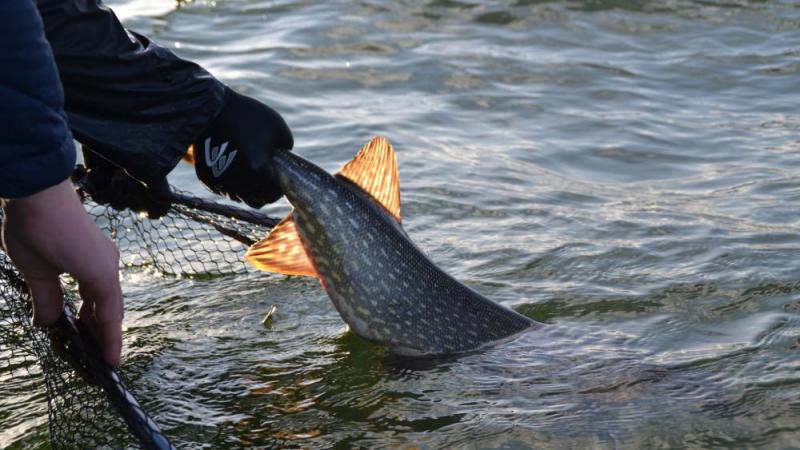
Artificial barriers or dead wood in the riverbed have a similar impounding effect, but, unlike aquatic plants, they also raise the water level during periods of high runoff and possible flooding in winter and spring, which can pose a risk. Furthermore, extensive stands of aquatic plants provide a rich habitat and food source for small invertebrates and fish, thereby benefiting the entire food web within the ecosystem.
Higher groundwater level in the floodplain
Due to hydrogeological conditions—the permeability of the subsoil in this region—the river and groundwater are well connected. Changes in river water level quickly propagated over several hundred meters into the floodplain aquifer. The impounding effect of macrophytes increased the water volume originally stored in the river channel by nearly 20 percent, plus up to one and a half times (up to 143 percent) in the floodplain aquifer (summer average, in the years 2011–2021). “The additional water in the aquifer helps to compensate for sudden fluctuations or declines in discharge and reduce the negative effects of droughts”, said Jörg Lewandowski. “An increased, more constant groundwater level can keep the moors in the floodplain wet, reduce their remineralization – the decomposition of peat – and increase nutrient storage in the floodplain soils. This is also relevant for land use, as it simultaneously benefits areas that are extensively grazed, for example.”
Mowing aquatic plants in summer reduces their positive water-retaining effect for the rest of the season
Aquatic plants in the Spree River are mowed regularly. The researchers demonstrated that mowing in July reduced the positive impoundment effect in the Spree for the rest of the season, thus counteracting water retention. However, mowing in September had no effect, as many aquatic plants die off anyway at this time of year.
The most important reason for mowing macrophytes in rivers, streams or ditches in lowland areas is often the presumed higher risk of flooding. However, the necessity should be carefully considered, especially in view of increasingly long periods of drought. “High discharges are very rare in summer for most rivers in temperate lowland areas, and most flood events occur in winter and spring, when no aquatic plants are growing. This also applies to many other rivers, streams and ditch systems in Germany. If the probability of flooding is low or the potential damage is acceptable, the many positive effects of aquatic vegetation can outweigh the risk“, said Dr Jan Köhler, author of the study.
The authors also point out that mowing can have serious ecological impacts. These include the destruction of habitats for aquatic organisms, increased greenhouse gas emissions, the remobilization of deposited particles, and reduced nitrogen retention.