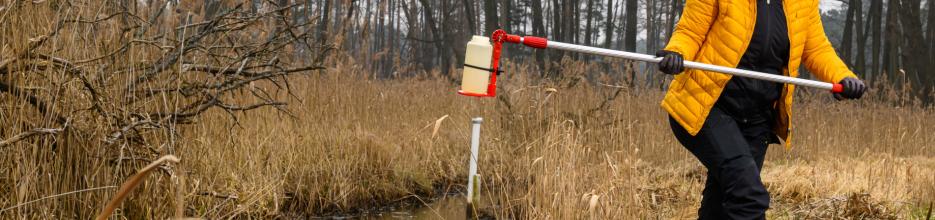

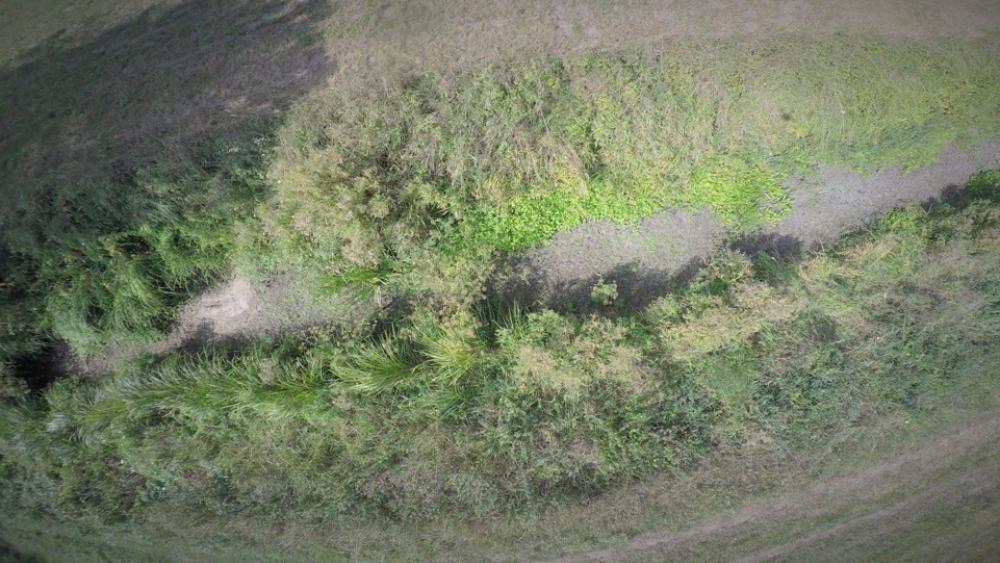
Example picture: The scientists’ data are consistent with general observations: parched soil, streams that no longer flow, wells that are dry. Periods of drought are becoming more common. | Photo: Hauke Dämpfling, IGB
The North Atlantic Oscillation (NAO) can link to European climate through changes in atmospheric pressure over the ocean. This new study shows that a positive winter NAO phase, which is becoming more common, is linked to mild, wet winters in central Europe, but reduced precipitation in the following summer. This delayed effect can lead to drought conditions, including deficits in soil moisture, streamflow, and groundwater, lasting up to ten months.
Spatially and temporally delayed response
“We were able to link the ‘memory’ of past atmospheric and oceanic conditions to the severity of subsequent summer droughts in Central Europe. This relationship bridges large spatial scales and different seasons with major local implications”, said Professor Dörthe Tetzlaff, Head of Department at IGB and senior author of the study.
The researchers suggest this relationship may result from complex interactions associated with the positive phase of the winter NAO and describe two complementary pathways:
On the one hand, enhanced poleward transport of heat and moisture over the Atlantic is associated with persistent Arctic sea-ice anomalies and subsequent spring and summer precipitation anomalies over Central Europe. On the other hand, warmer winter and spring conditions promote earlier and enhanced vegetation growth and increase seasonal water use. This reduces soil moisture in spring and makes ecosystems more vulnerable to subsequent precipitation deficits in summer.
“Together, these pathways provide a scientifically plausible explanation for the delayed relationship identified in our results”, said Dr Cong Jiang, lead author of the research.
Such findings could help improve the seasonal forecasting of summer drought risk and strengthen resilience planning for both terrestrial and freshwater ecosystems in the drought-sensitive lowlands of Europe.
Scientific approach
The research team led by Dörthe Tetzlaff developed an innovative framework to connect large-scale climate variability with local effects on water availability, land management and aquatic ecosystem responses in the lowlands of northeastern Germany.
The Demnitzer Mill Creek catchment, covering approximately 66 km2, serves as a unique outdoor laboratory for IGB and is representative for other catchments in the NE of Germany. Few other lowland catchments have such detailed observations of water movement and storage across the hydrological system. Monitoring includes meteorological data, soil moisture, streamflow, groundwater, vegetation dynamics and stable water isotopes.
“Stable water isotopes provide a natural 'fingerprint' that helps researchers trace the sources, movement and residence times of water within the landscape”, said Prof Chris Soulsby, co-author of the study and Professor at the University of Aberdeen, Scotland. In their study, the researchers used detailed observations of soil moisture and stable water isotopes to constrain a process-based, isotope-enabled ecohydrological model and combined it with teleconnection diagnostics, large-scale climate reanalysis datasets and drought indices.
This integrated approach allowed the researchers to link continental-scale variability in winter atmospheric circulation with the local propagation of drought through the soil–plant–atmosphere continuum (SPAC) in a representative lowland catchment of the North European Plain. The study highlights the vulnerability of land use and water availability to future climate change and the need for policies to build resilience.