
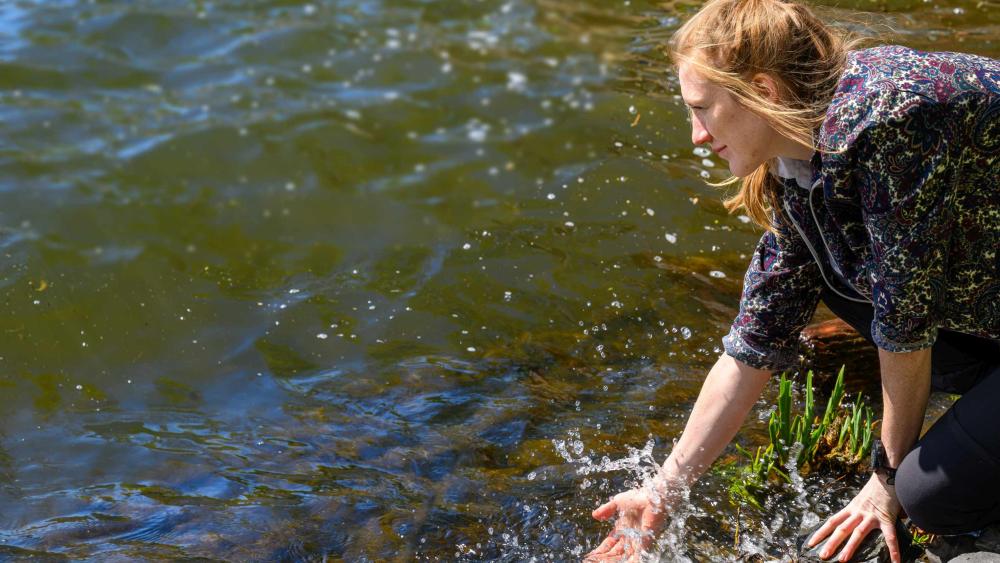
Erika Freeman, new research group leader at IGB. | Photo: David Ausserhofer, IGB
Dr Freeman, the carbon cycle is a prevalent topic in the context of climate change. However, freshwater ecosystems are not the first thing that comes to mind in this context. What is their important role in the process, and what is your main area of research?
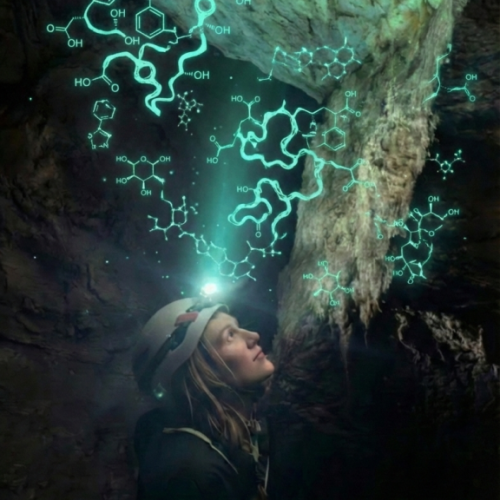
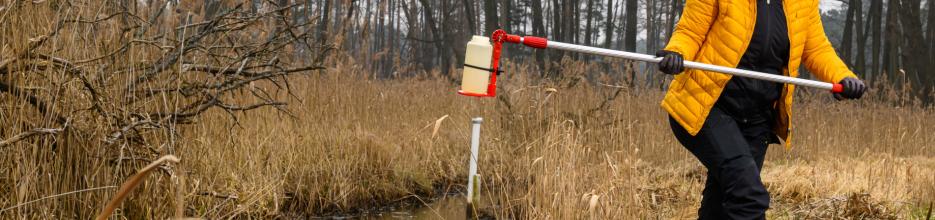
When we think about carbon and climate change, we tend to picture smokestacks or vast forests. But rivers, lakes and streams are quietly doing enormous work. They receive, transform, transport and release huge quantities of organic carbon on its journey from land to sea. Globally, inland waters process roughly as much carbon each year as the world's oceans absorb, yet we understand surprisingly little about what actually happens to that carbon at the molecular level. My research group uses ultrahigh-resolution mass spectrometry to look at the thousands of individual molecules that make up dissolved organic matter in freshwater. By studying this molecular diversity, which I think of as a hidden "chemical biodiversity," we can start to figure out which molecules get broken down, which stick around, and why. This matters because it determines how much carbon returns to the atmosphere as CO₂ and how much stays put. With the Aquatic Biogeochemistry of Carbon group at IGB, I want to connect these molecular-level findings to the bigger question of how freshwater ecosystems regulate carbon fluxes under a changing climate (among other projects I can happily tell anyone interested).
Your CV states that you enjoy climbing in your free time. Climbing is difficult in Berlin as there are no mountains. Have you found an alternative leisure activity in this city?
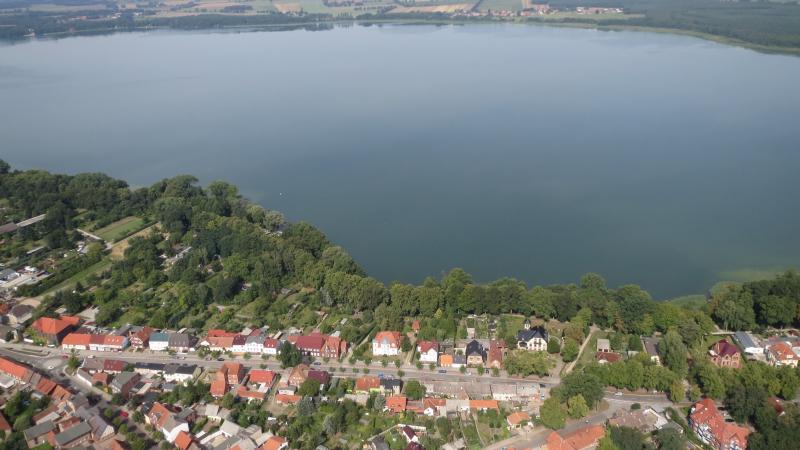
It's true, Berlin is not known for its alpine terrain. But I've found that what the city lacks in vertical metres, it compensates for with an excellent network of parks, forests and lakes. I'm an enthusiastic trail runner, and the forests around the Müggelsee, right on IGB's doorstep, are genuinely great for a morning run. For climbing, Berlin has a surprisingly strong indoor bouldering scene, so my fingers stay in shape and I have fun chatting to new folks and solving bouldering problems together.
You aim to advance the 'ecology of molecules'. What is your favorite molecule and why?
Caffeine. It powers the science, it powers the scientist, and it shows up in rivers as a tracer of human influence on freshwater systems. Relevant to my work in more ways than one.
If I'm allowed a second answer: lignin-derived molecules. Lignin is one of the most abundant organic polymers on Earth, the stuff that gives trees their rigidity. When it breaks down, it releases phenolic compounds that flow into streams and rivers, carrying chemical information about the vegetation, soils and microbial processes they've passed through. Some persist for centuries in soil, yet become highly reactive in water when exposed to sunlight or microbial enzymes. This makes them key players in whether terrestrial carbon gets stored or returns to the atmosphere. And every time I see their signature peaks in a mass spectrum, I know I'm looking at the molecular legacy of trees that may have stood for decades. It helps put problems with a higher turnover rate in perspective.