Christian Birkel
Research Group LeaderDepartment


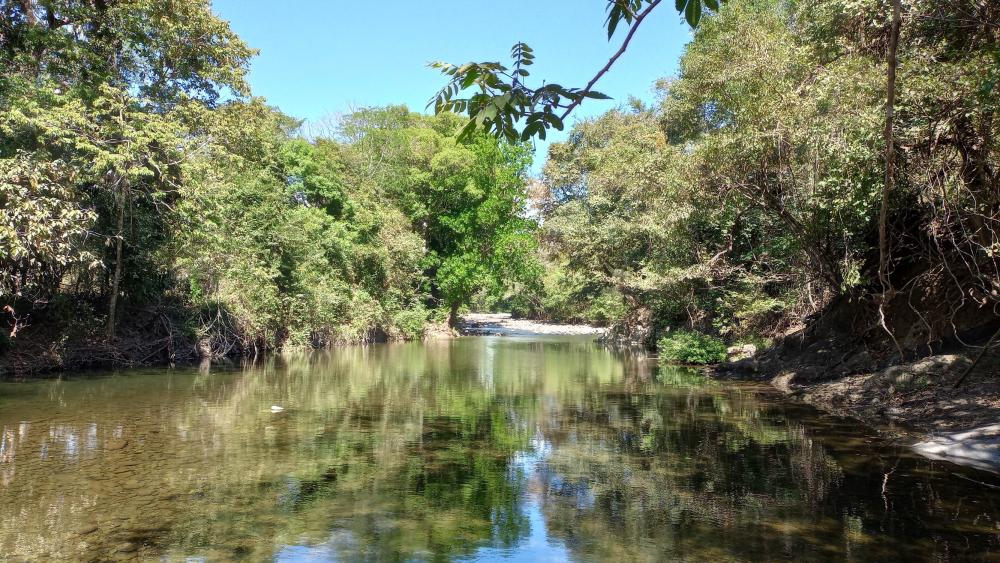
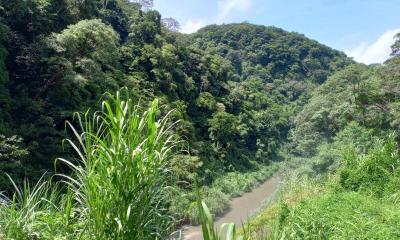
Tropical river during the dry season © Christian Birkel
The Ecohydrological Modelling under Global Change group of the Department of Ecohydrology and Biogeochemistry primarily develops and applies numerical tools to simulate connected terrestrial-aquatic ecosystems. Such models help address questions on:
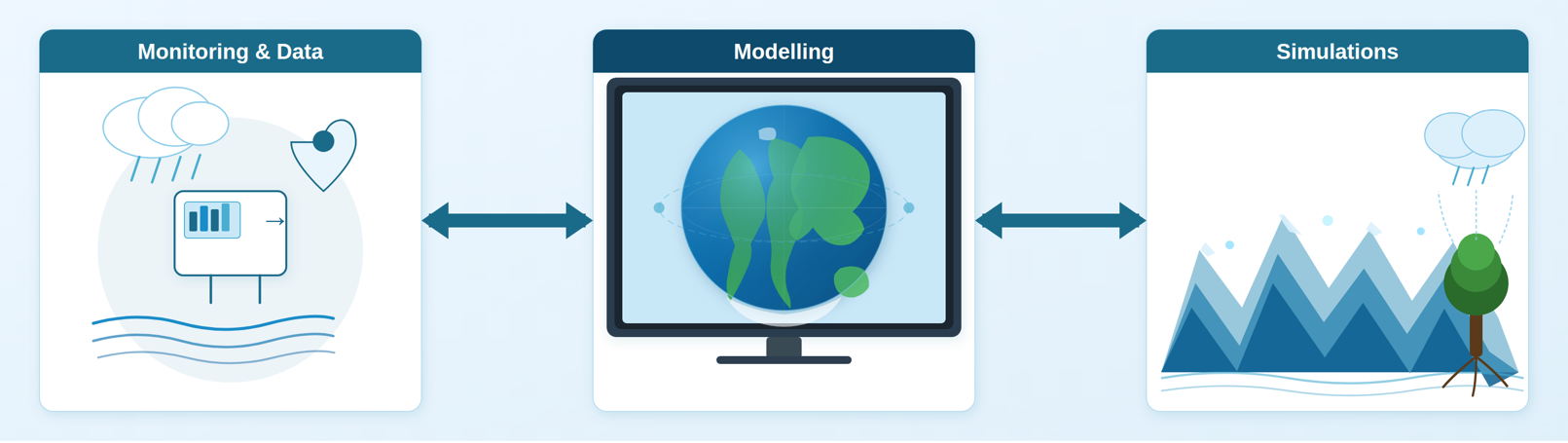
We hereby aim to better understand and predict the functioning and impacts of global change on our land- and waterscapes through advanced process-based models. These state-of-the-art models are developed and tested with measured data providing robust estimates of how much water flows, with what quality and how much water is stored in the landscape and water bodies.