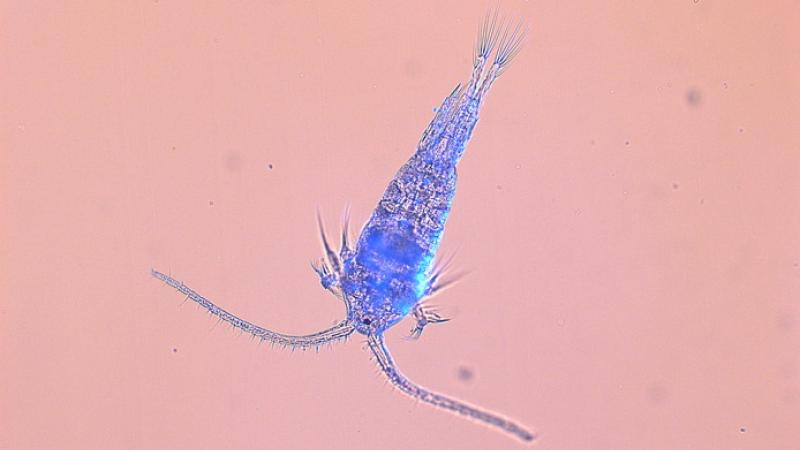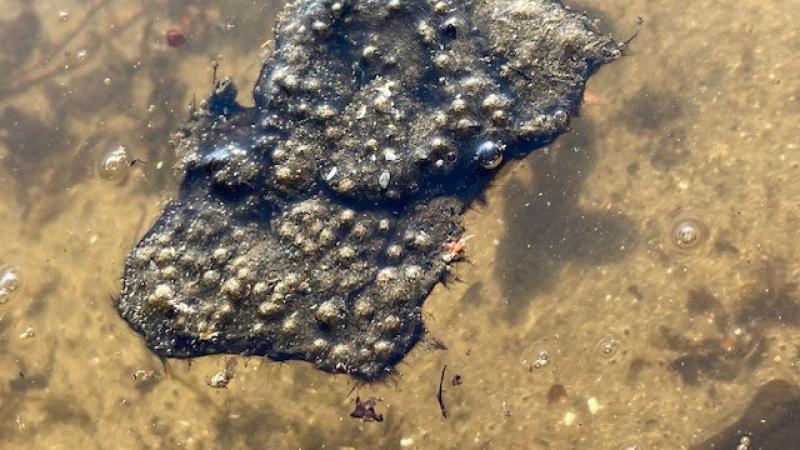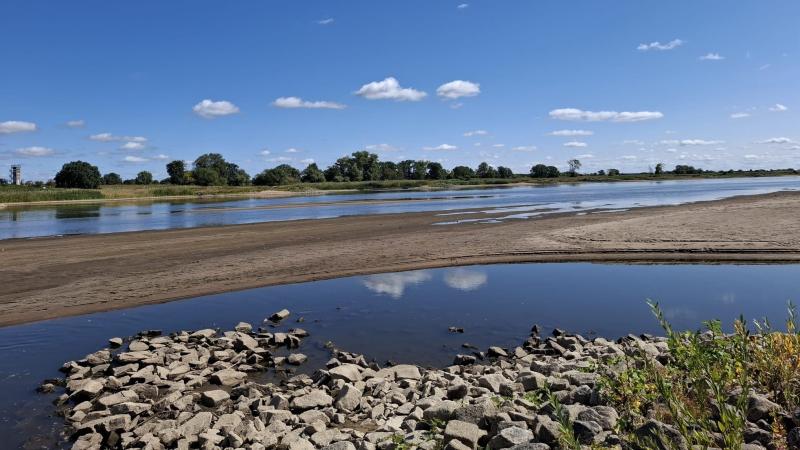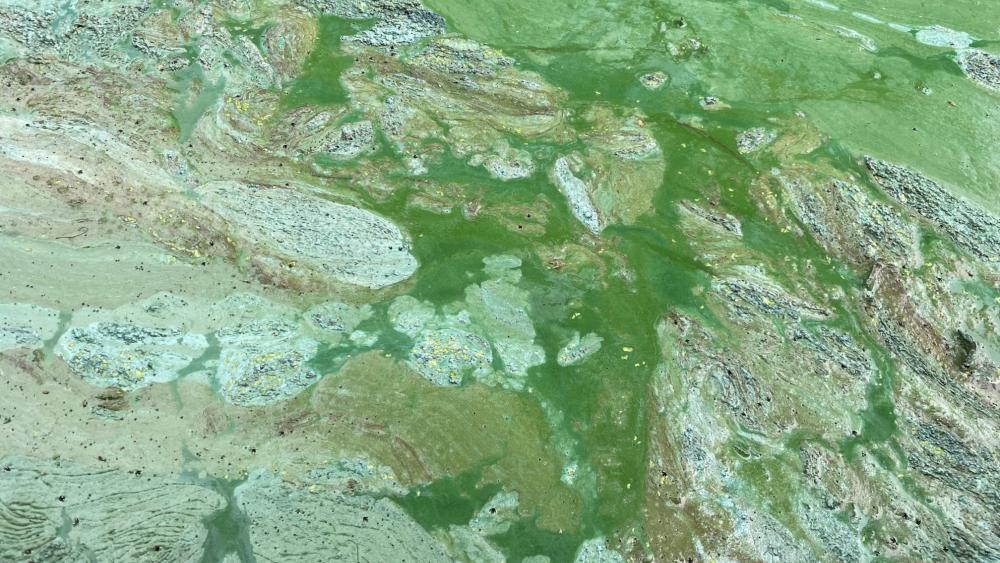
This is what a mass bloom of cyanobacteria on the water’s surface can look like. | Photo: Luc De Meester
Cyanobacteria, also known as blue-green algae, often lead to water quality issues in freshwater ecosystems during the summer months. This is because, following a bloom, large numbers of cyanobacteria die and decompose, consuming oxygen in the process. Furthermore, cyanobacteria can produce toxic substances. Lakes contaminated with cyanobacteria also release increasing amounts of greenhouse gases. According to estimates, they account for around 19 per cent of global methane emissions.
For this reason, large-scale algal blooms are increasingly being harvested mechanically by skimming the algal mats off the surface. In China, this method is routinely implemented as a rapid-response measure during cyanobacterial blooms. Until now, however, little was known about the quantities of greenhouse gases that can be released when harvesting blue-green algae sludge.
More cyanobacteria, higher methane emissions
Lake Dianchi, a hypereutrophic lake in southwestern China, is often affected by large cyanobacterial blooms. A Chinese research team, together with IGB researcher Prof. Hans-Peter Grossart, conducted two experiments to investigate how much methane is produced in the lake and in the harvested blue-green algae sludge. In one of the experiments, they analysed methane production at different levels of sludge moisture.
They found that the concentrations of greenhouse gases were positively correlated with chlorophyll a and turbidity, but negatively correlated with dissolved oxygen and pH. This suggests that higher algal biomass and the associated physico-chemical changes promote the emission of greenhouse gases.
A 15 per cent reduction in sludgemoisture halved methane emissions
Furthermore, high residual moisture levels in the sludge led to significantly higher methane emissions. The decomposition of the sludge also resulted in a shift in the bacterial communities towards more methane-producing species such as Methanosarcina and Methanobacterium, whose names even reflect their function.
“Cyanobacterial sludge should therefore be dewatered more quickly or stored wet for a shorter period. In our experiments, reducing the moisture content by 15 per cent – from 93 per cent to 78 per cent – already cut methane emissions by half,” said Prof. Hans-Peter Grossart.
These findings underscore the need, when combating blue-green algae blooms, to take into account not only the mechanical removal of the algae but also the subsequent treatment of the harvested sludge, in order to minimise the release of greenhouse gases.