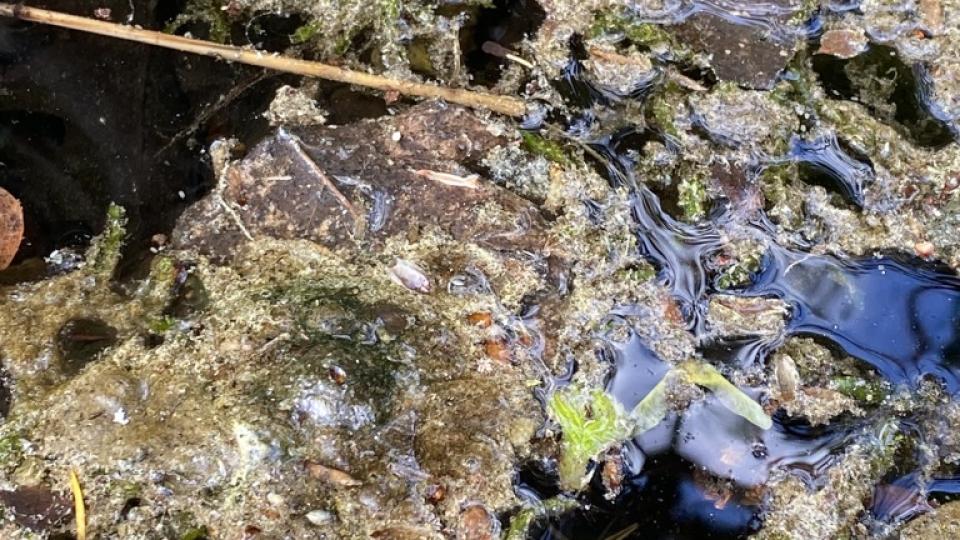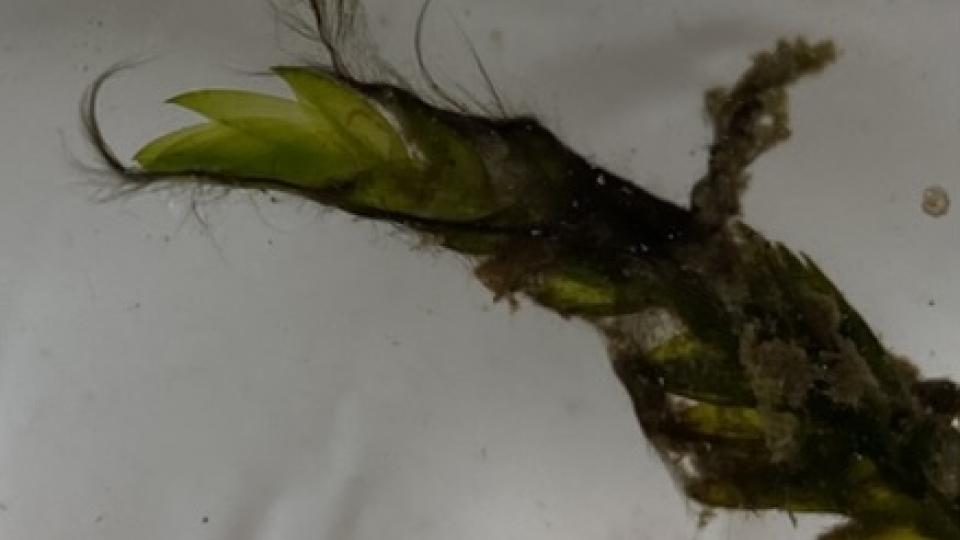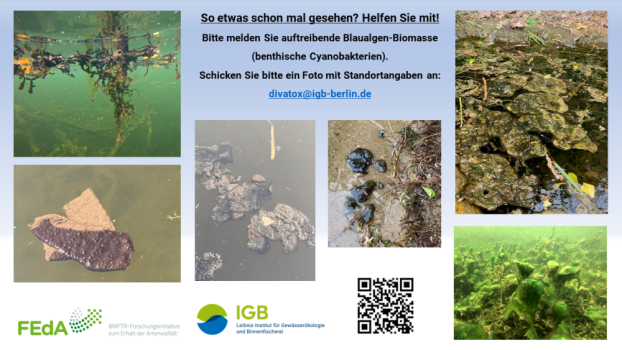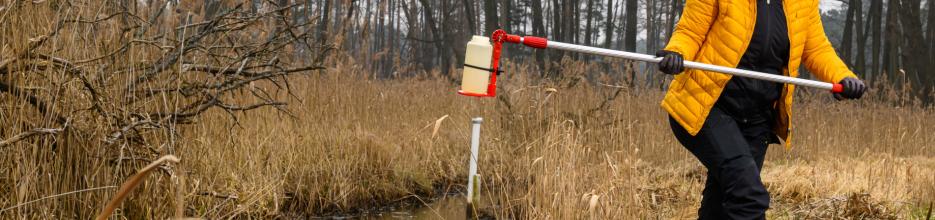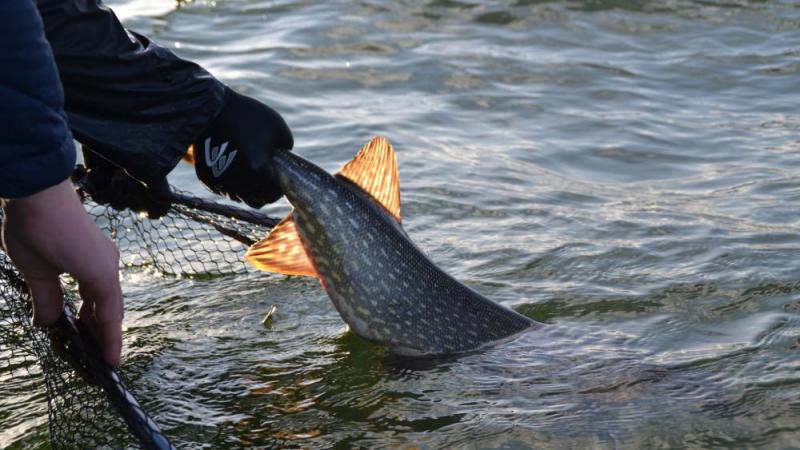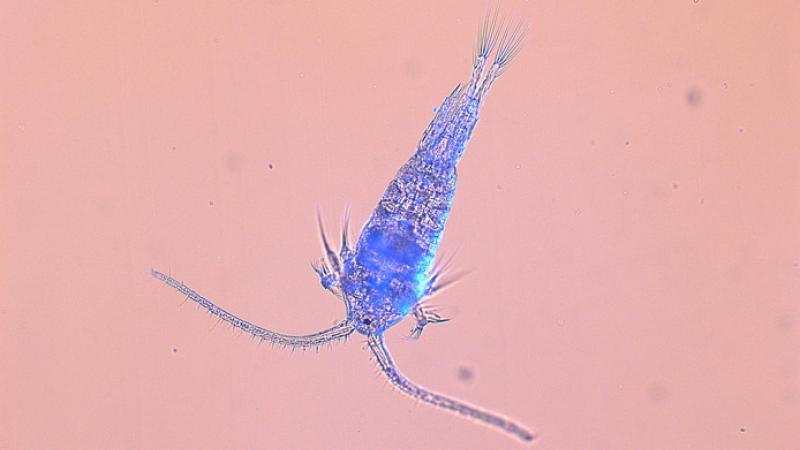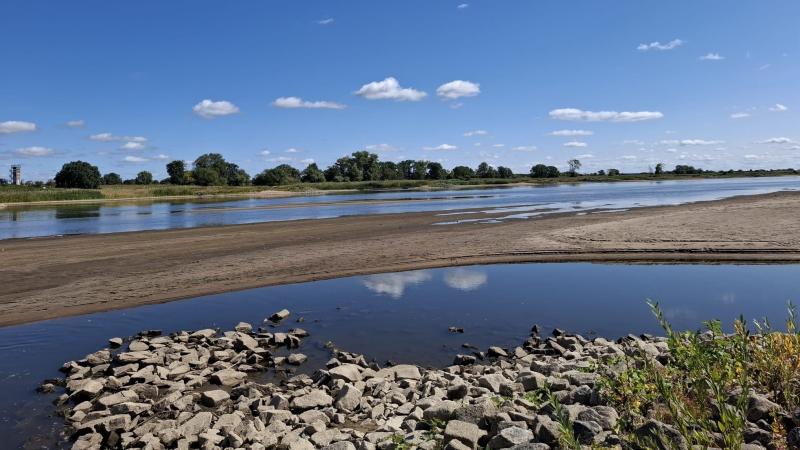

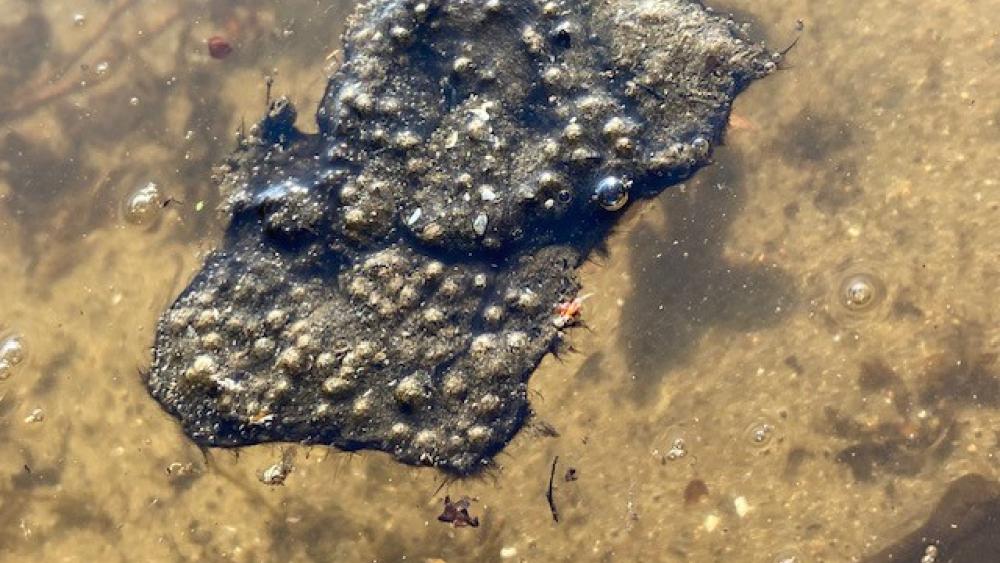
Plant-associated cyanobacteria can, for example, look like slime blobs. They therefore differ significantly from typical blue-green algae blooms and are difficult to spot in water bodies. | © Britta Geiser/IGB
Cyanobacteria are usually perceived as organisms suspended in water that form visible blooms under favourable conditions. However, there are also species that grow on aquatic plants, known as plant-associated cyanobacteria. Some of these can produce strong
Not just in open water
The new review article shows that such plant-associated cyanobacteria are not restricted to specific types of water bodies. The researchers documented occurrences in 107 freshwater systems across twelve countries on five continents. Ninety-seven of these cases were from lakes, reservoirs, and ponds, while the remaining ten were from rivers, streams, and other flowing watercourses. The standing waters investigated ranged in area from one to 30,400 hectares, and in maximum depth from 1.8 to 288 metres.
Notably, the organisms were also found in nutrient-poor, oligotrophic waters. Therefore, their occurrence is not limited to nutrient-rich lakes and rivers, where suspended cyanobacterial blooms are particularly common.
The review lists at least 24 species of aquatic plants that have been associated with toxic or potentially toxic cyanobacteria. These include submerged, floating, and emergent plants. Examples include waterweed (Hydrilla verticillata), spiked water milfoil (Myriophyllum spicatum) and hornwort (Ceratophyllum demersum).
A blind spot in water monitoring
"Unlike suspended cyanobacteria, plant-associated forms often occur on a small scale and show a very patchy distribution. However, routine water monitoring often focuses on the water column. Consequently, plant-associated forms may go undetected,” explained IGB researcher Dr Sabine Hilt, the article’s lead author.
If these plants are dislodged by waves, currents or other forces, the associated cyanobacteria be carried to the shore. In Europe and North America, hundreds of bird deaths and at least 26 dog deaths have already been linked to plant-associated cyanobacteria.
“So far, plant-associated cyanobacteria have been studied far less than planktonic forms. Our review shows that, when monitoring freshwater bodies, we should look not only at the water column but also at the communities living on aquatic plants," said Sabine Hilt.
These organisms are also important in aquatic food webs. Herbivores can ingest cyanobacteria alongside their food, while zooplankton and invertebrates graze on the communities growing on aquatic plants. There is already evidence of toxin transfer via food webs. However, it is not yet reliably known how frequently and under what conditions this route leads to significant exposure in animals.
More data is needed for a robust risk assessment
It remains unclear, in particular, which environmental conditions promote growth and toxin production on aquatic plants. There is also a lack of reliable data on the sensitivity of different animal species to the toxins and the extent to which they are passed on within aquatic and terrestrial food webs. Therefore, a generalised health risk to humans cannot be inferred from the findings to date.
The review thus highlights an importantresearch gap: anyone wishing to detect toxic cyanobacteria in freshwater must examine not only the water itself, but also the plants
~
Methodology and transferability
For this review, researchers analysed 148 studies from an earlier review and 206 publications from the Web of Science Core Collection. They also searched the reference lists of 34 relevant papers. The data collected included information on water body type, size, depth, trophic status, aquatic plants, cyanobacteria, detected toxins and documented cases of animal poisoning, among other things. As this is a systematic synthesis of existing findings rather than an experimental study, conclusions regarding global distribution based on the available literature are limited. Many occurrences were only identified after cases of animal poisoning were reported. Regions with little research, particularly Africa, are significantly less well documented.
Aquatic plant-associated toxic cyanobacteria—a new threat to freshwater ecosystems
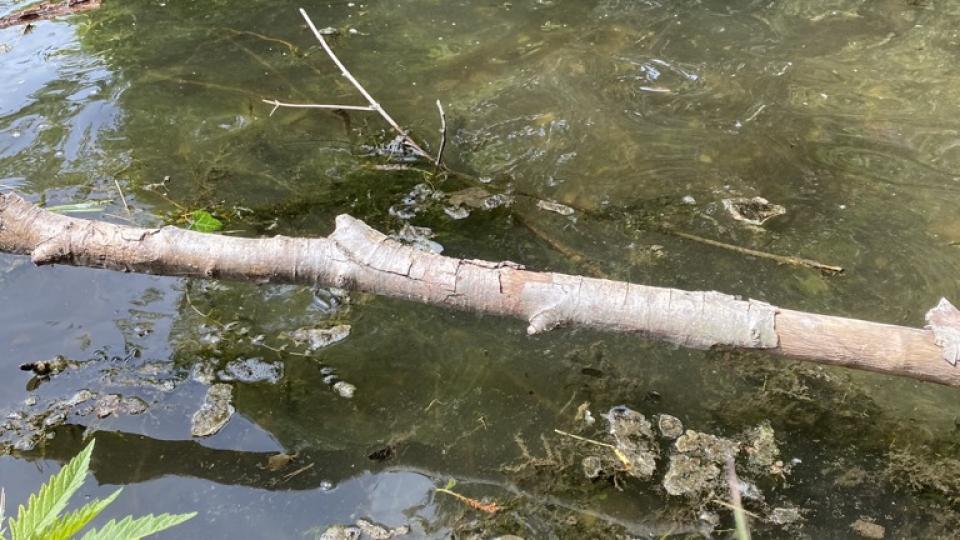
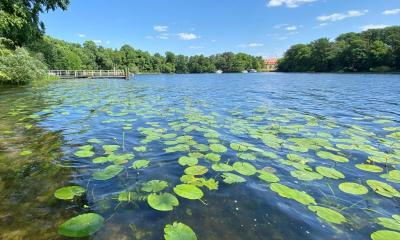
All pictures: Toxic cyanobacteria associated to aquatic plants in Lake Tegel in Berlin. | © Britta Geiser/IGB