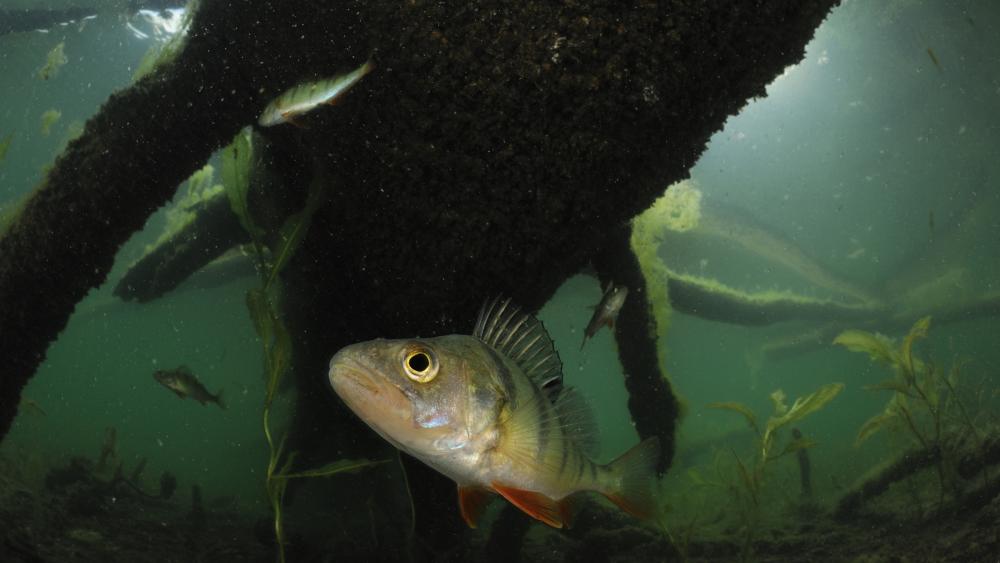
Example photo: Fish can exhibit individual behaviors. | Photo: Solvin Zankl
Who would have thought? Although Amazon mollys are genetically identical as clones of their mothers, individual fish systematically differ from one another in their behavior—even when raised under identical conditions. This is true even for juvenile fish. In fact, among all fish species studied to date, there is immense inter-individual variation, e.g., shy and bold or social and less social individuals. Researchers refer to these as behavioral types.
Fish account for about half of all vertebrate species and exhibit an impressive diversity of behaviors within populations, between populations of the same species, and between populations living in different ecosystems. As with all vertebrates, behavioral diversity in fish arises from the interplay of various factors. These include an animal’s internal state (e.g., hunger level), its genetic makeup, its ability to flexibly adapt its behavior, and the external conditions to which it is exposed. And this diversity can be systematically altered by humans.
Humans can influence fish behaviour systematically
Robert Arlinghaus, professor of integrative fisheries management at IGB and Humboldt Universität zu Berlin, has been studying the behaviour of freshwater fishes for many years. He contributed to the two articles, which provide an overview of how human activities influence fish behavior and how humans exert a selective pressure that differs from natural factors.
Robert Arlinghaus explained: “Human influences on fish behavior include, for example, habitat alteration and disturbance, migration barriers, pollution, the spread of invasive species, intensive and trait-selective fishing, animals escaped from aquaculture, and climate-driven shifts in ecological processes. These so-called anthropogenic factors can directly or indirectly influence activity and movement, reproductive behavior, reactions to predators, aggression, social behavior, cognition, and learning.”
Fishing selects for bold, aggressive, and active fish
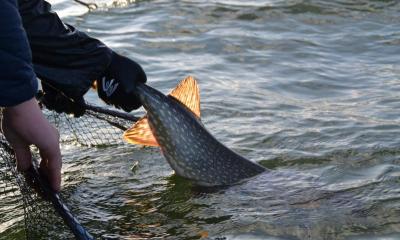
One example of this is the selection of certain behavioral traits caused by fishing. Previous studies by the IGB have shown that, in recreational fishing, it is primarily the bold and active carp and pike that are removed from the populations. In heavily fished aquatic ecosystems, shyness can therefore be an evolutionary advantage and become established over generations. “However, this also means that fish in heavily fished areas no longer swim around as actively. This can alter the distribution of fish, the relationships between predators and prey, and competitive dynamics,” said Robert Arlinghaus. Fish ladders at hydroelectric power plants can also select for certain behaviors, such as the ability to sprint, and thus lead to behavioral differences among subpopulations below and above damns.
Various types of environmental pollution can lead to behavioral changes
Studies by Swedish researchers involving various fish species have demonstrated that environmental pollution influences fish behaviour. For instance, guppys exposed to a realistic environmental concentration of a pharmaceutical contaminant known to reduce human anxiety exhibited a uniform level of activity. Variations in activity levels among individuals dropped to less than half of those observed in unexposed fish. Perch and salmon exposed to pharmaceutical residues as well as cocaine swam more actively in lakes, making them more likely to be eaten.
Artificial light at night is an example of non-material pollution of water bodies. It can also rearrange the interactions between species. For example, small invertebrates gather in illuminated areas of aquatic ecosystems, which in turn alters the feeding behavior and habitat selection of fish.
Another example is genetic impacts caused by escaped farmed salmon in Norwegian fjords. Salmon return to their native rivers to spawn. This locally adapted behavior can be lost through interbreeding with domesticated farmed salmon that escaped from net cages used for aquaculture.
How the state of an ecosystem influences behavioral diversity
Whether behavioral diversity is maintained also depends on the state of the ecosystem in question. “In diverse and ecologically challenging habitats, behavioral diversity is often particularly high, as individuals specialize in different resources or strategies,” said Robert Arlinghaus. Conversely, behavioral diversity can contribute to the stability and resilience of the fish communities because it protects populations from local disturbances—both within a species and between different species.
Fisheries also benefit from behavioral diversity
Behavioral diversity is particularly important for fisheries. In the case of Pacific salmon, it has been shown that different subpopulations in different rivers have different spawning times and migration distances. If reproduction in a stock in one river fails due to weather conditions, this can be compensated for by reproduction in a neighboring river. The existence of these different migration patterns in a region across multiple rivers thus stabilizes fishery yields in a region. Another example is cod in Iceland: In the past, the sedentary coastal fish and the more migratory offshore stocks supported different fishing fleets. Selective fishing of the coastal stocks has depleted the corresponding subpopulation, causing negative impacts on the coastal fishery.
Taking fish behavioral diversity into account in species conservation and management
The researchers recommend that species and population conservation should take greater account of behavior—and, above all, behavioral diversity. Behavioral diversity serves as a reservoir for adaptations to environmental changes, thereby strengthening resilience. This applies, for example, to patterns of foraging, habitat selection, and reproduction. Robert Arlinghaus emphasizes: “We urge that behavioral diversity be recognized as an aspect of biological diversity and taken into account in the management of species and populations.” This can be achieved through tailored management measures.
One example is the so-called “harvest slot” for fisheries, which spares not only small fish but also very large ones. These large fish are not only particularly important for reproduction; their size is often accompanied by particularly bold behavior. It is also helpful to reduce the selective pressure from fishing in specific locations and to distribute it more widely. Diverse habitats also promote behavioral diversity. Finally, in aquaculture providing diverse conditions helps individuals to develop diversified behaviour, which could increase survival after release into the wild.
As the authors point out, assessing behavioral diversity is challenging. One reason for this is that fish behavior evolves dynamically and cannot be assessed based on a single snapshot. However, modern methods such as biotelemetry offer promising approaches for drawing conclusions about the behavior of fish in the wild and, based on this, making informed decisions regarding fisheries management and species conservation.
Read the article in Trends in Ecology & Evolution >
******
Fun Facts: Would you have thought fish were capable of this behavior?
- Eels migrate from European inland waters across the Atlantic to spawn in the Sargasso Sea.
- Salmon and other migratory fish can recognize their native rivers by scent.
- In Atlantic salmon, a single gene determines the onset of puberty and thus the timing of the spawning migration from the oceans back into the rivers.
- Pike exhibit three different behavioral patterns in lakes, and as many as four in coastal regions. Some of them spend their entire lives in slightly salty brackish water, while others migrate back to tributaries during the spawning season, much like salmon.
- Fishing pressure causes fish to become more shyer and harder to catch.
- In the summer, carp form stable groups that swim together through a lake.
- Carp can remember for seven months that they were caught and released, which reduces their readiness to take angling baits.