
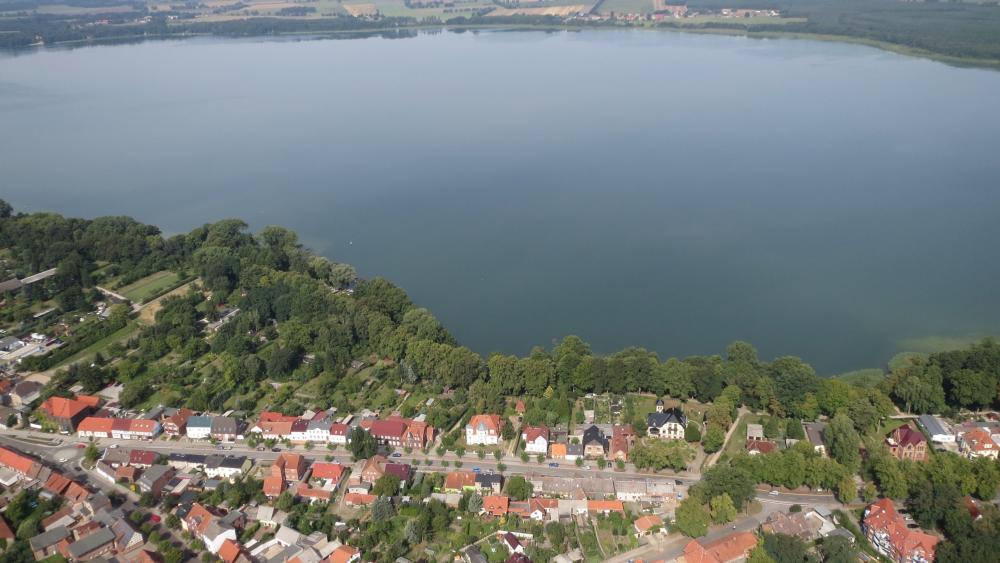
© Michael Hupfer/IGB
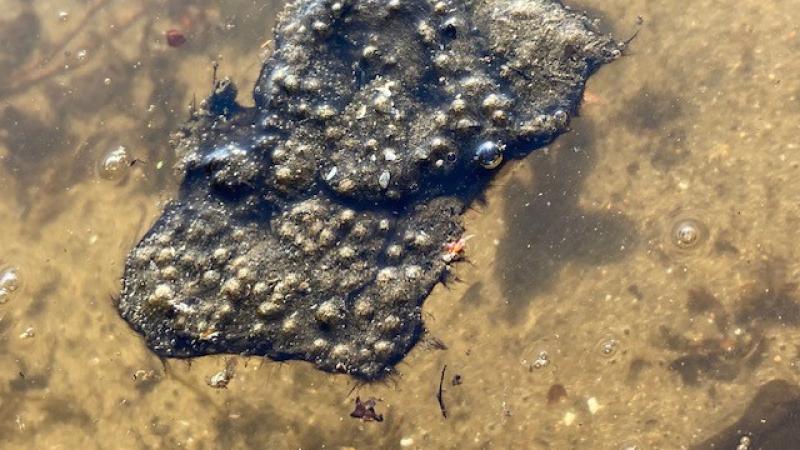
Nutrient concentrations in Lake Arendsee have been too high for decades. The consequences include oxygen depletion, algal blooms, the disappearance of submerged vegetation, fish kills and bathing bans. For this reason, since 2010, the state of Saxony-Anhalt has invested financial and organisational resources in identifying the causes of the high nutrient load and developing a suitable restoration strategy. Possible measures were discussed and prioritised by experts from various fields of water management. They concluded that long-term success could only be achieved by combining two measures: reducing external nutrient inputs (remediation) and reducing phosphorus within the lake (restoration).
Scientific investigation into the causes of phosphorus pollution
Identifying the sources of the nutrient pollution proved particularly time-consuming and challenging, and the findings also came as a surprise to the scientific community. IGB researcher Dr Jörg Lewandowski explained: “Before we began our investigations, it was widely believed that either nutrients from agriculture or northern geese were responsible for the excessive nutrient load.” Both assumptions were disproved by the investigations.
It is now known that approximately half of the phosphorus entering the lake originates from the groundwater of the urban area of the city of Arendsee. This input is human-induced and not of natural origin. However, the former sewage irrigation system and the former fertiliser storage facility in the railway station area have been ruled out as sources. Possible sources instead include improperly decommissioned soakaways, excessive fertilisation in private gardens and leaking private or public sewerage systems. Jörg Lewandowski explained: “In addition to phosphorus, we detected chemicals such as sweeteners and pharmaceutical residues in the groundwater. These can essentially only have come from leaking sewage systems.”
Remediation and restoration complement each other, but can be carried out sequentially
How can these inputs from groundwater be reduced? Professor Michael Hupfer, an IGB scientist who has been researching Lake Arendsee for three decades, said: “If we were to focus solely on reducing inputs via groundwater, it would take several decades after the measures had been completed for the lake to return to natural nutrient concentrations. This is because the lake has a water renewal time of more than 50 years. However, if the phosphorus is rapidly reduced through precipitation, valuable time is gained for planning and implementing remediation measures.”
The Lower Water Authority of the Altmarkkreis Salzwedel makes approval of phosphorus precipitation dependent on simultaneous action to tackle the sources of pollution, among other things. No such concept has yet been submitted. “Our calculations have shown that both remediation and restoration are necessary, but not necessarily at the same time,” said Michael Hupfer. If phosphorus continued to enter the system via groundwater over the long term, the precipitation treatment would have to be repeated after 20 to 30 years, similar to the approach taken at Lake Barleber.
Inaction also carries risks, including for vendace
“The Altmarkkreis's argument that using a precipitating agent would pose an incalculable risk to the ecosystem is incomprehensible because this is a proven technology. Rejecting the precipitation treatment fails to take into account the fact that taking no action also poses significant ecological risks to the lake,” said Jörg Lewandowski.
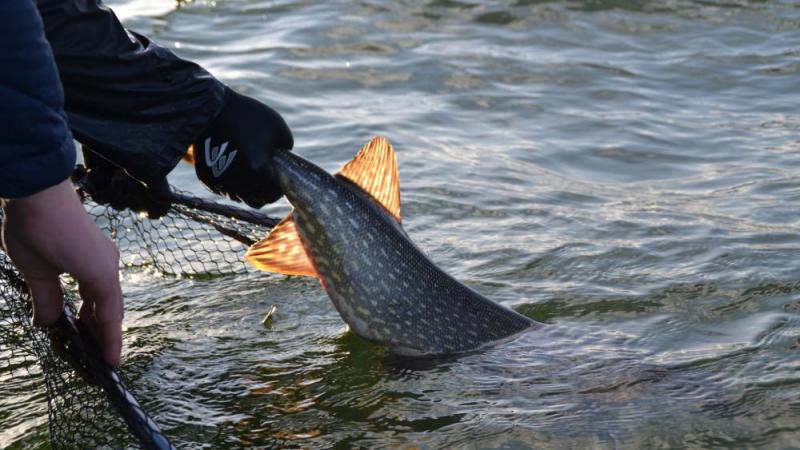
Oxygen conditions in the deep water have been critical for years. With climate change, algal blooms will occur more frequently, while the habitat available to oxygen-requiring organisms will continue to shrink. This would also threaten the survival of the vendace population in Lake Arendsee. Currently, the population can only be maintained through stocking, as natural reproduction of this species of fish is barely possible under the current oxygen-depleted conditions in the lake.
Reducing phosphorus levels is key to climate adaptation
Studies of numerous German lakes have shown that those with lower levels of phosphorus are more resilient to the effects of climate change. Michael Hupfer concluded from these findings that “the best way to prepare lakes for further climate change is to reduce their phosphorus concentration”.
Phosphorus precipitation in lakes has therefore been carried out worldwide for the past five decades. When applied correctly, this method can minimise ecological risks. The district authority's concern that the precipitated product would remain in the sediment permanently is not only unavoidable, but also desirable because the precipitated material can bind additional phosphorus there. According to the scientists, concerns about phosphorus being released again at a later stage are not applicable to Lake Arendsee. Jörg Lewandowski explained: “Lake Arendsee is a deep lake with steeply sloping shores, where the wind cannot resuspend the precipitated material. Consequently, remobilisation processes do not play a role here.” The size of the lake also does not prevent successful precipitation, provided the dosage is adjusted accordingly.
What options remain now?
The lake has accumulated more than 25 tonnes of phosphorus. In-lake precipitation could be carried out using alternative precipitating agents. Alternatively, external treatment plants could be considered, which would also use precipitating agents. One advantage of such facilities is that, unlike deep-water discharge, the water is returned to the lake rather than leaving it. Michael Hupfer said, “The previous deep-water discharge scheme did not work because the lake’s water residence time is very long, meaning that the amount of water and nutrients that could be removed was far too small to achieve a successful outcome.”
In addition to identifying and remediating the sources, the only options for reducing phosphorus inputs from groundwater are so-called end-of-pipe technologies. These technologies reduce phosphorus concentrations directly at the points where groundwater enters the lake along the shoreline. For instance, wells could be installed to extract groundwater along the affected sections of shoreline. This would create cones of depression to prevent incoming groundwater from reaching the lake. The extracted water would then need to be treated in either a technical phosphorus removal facility, such as a containerised system, or by nature-based means in large-scale constructed wetlands, before being discharged back into the lake. Other technical options should also be investigated, such as permeable reactive barriers designed to remove phosphorus from particularly affected sections of shoreline.
“It is our hope that those responsible locally and the relevant authorities will recognise the seriousness of the situation. Inaction is not an option if Lake Arendsee is to shine once again as the pearl of the Altmark,” said Michael Hupfer.