

The pike in a cage on a Berching pfennig coin. | Picture: State Coin Collection, Munich, BY-NC-SA 4.0
The legend of the pike from Berching goes like this: a long time ago, the Sulz River in Bavaria burst its banks during a flood. When the waters receded, the residents of Berching found a strange creature in their meadows. They took it to the town hall to debate what it might be. Ultimately, they all agreed that it was a bird and locked it in a cage. But it was actually a pike. When the pike opened its mouth to take its last breath, the people of Berching cried out, “Hush, it's going to sing!”. The pike in the cage appears on a 10-pfennig coin from 1920. It was 'emergency currency', issued by the local authorities to make up for a shortage of official money. For this reason, such coins often featured local references.
In ancient stories, eels or pikes make people look foolish
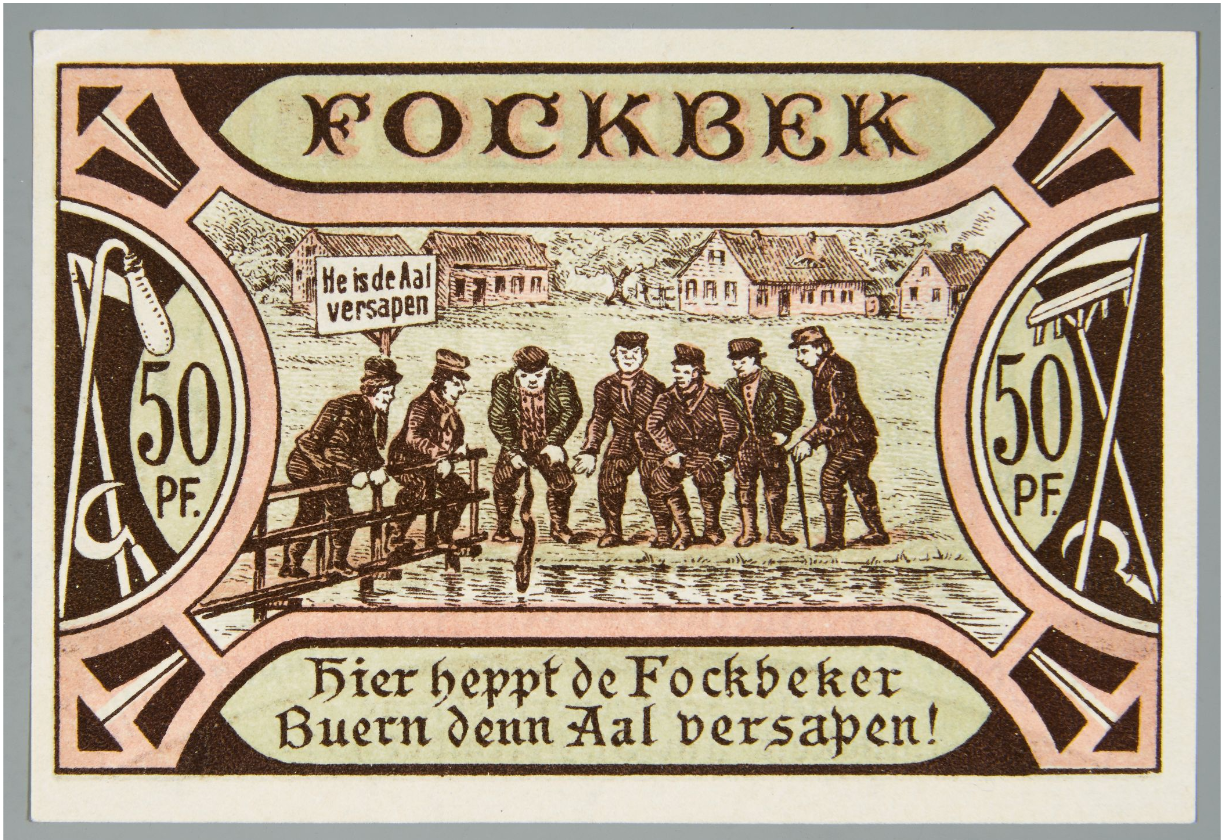
© Schleswig-Holstein State Library CC BY-NC 4.0
"There are a surprising number of humorous stories about fish in Germany, particularly pikes and eels. They often feature people who misunderstand the nature of the fish and therefore treat them oddly. Another example is the tale of the eel that is drowned in a lake as a punishment. These traditions reveal two things. Firstly, we are less familiar with the biodiversity beneath the water’s surface than we are with land animals. However, they also demonstrate that economically important or particularly charismatic species have always been reflected in our culture and art,” said Phoebe Griffith. The IGB researcher explores the cultural significance of freshwater and its inhabitants.
Deep-rooted perspectives shape our relationship with nature
She analyses ancient, handed-down stories from various countries to see how they reflect our view of aquatic ecosystems and the creatures that inhabit them. These perspectives can vary greatly. One example is the cultural approach to flooding. In New Zealand culture, for instance, rivers are considered living entities with the right to behave as rivers should, including bursting their banks. In contrast, consider the cultural mindset of the people of the Frisian Islands. There, protecting people from flooding has always been essential. According to many old stories, God would punish the people with a flood if the dykes were not properly maintained. “These cultural roots cannot be cast aside overnight, and often – at least in Europe – we are no longer even aware of them because such stories are no longer told or passed on,” explained Phoebe Griffith. This can also make it difficult for nature conservation or species protection initiatives, for example, when priority is still given to technical rather than natural flood protection.
Nature conservation is based on values, which are shaped by culture and are never universal
Phoebe Griffith therefore argues that we should pay more attention to the cultural aspects of species conservation. “The loss of biodiversity in freshwater ecosystems cannot be viewed as a purely ecological problem. It is inextricably linked to the social relationships, meanings, political systems and power structures that characterise these ecosystems.” Although social science aspects are increasingly being considered in species conservation, the focus remains on individual decision-making rather than collective cultural influences.
According to the scientist, nature conservation is based on values that are never universal. In industrialised nations, for instance, the focus is on protecting certain endangered animal species, whereas in other cultures the aim is to preserve the relationship with the living environment. “These are diametrically opposed approaches that can give rise to major conflicts,” said Phoebe Griffith. “For example, when species conservation prohibits this relationship with nature, such as when the local population’s hunting of endangered animals in reserves is criminalized.”
An example from the Amazon in Brazil shows that there is another way
© David Ausserhofer
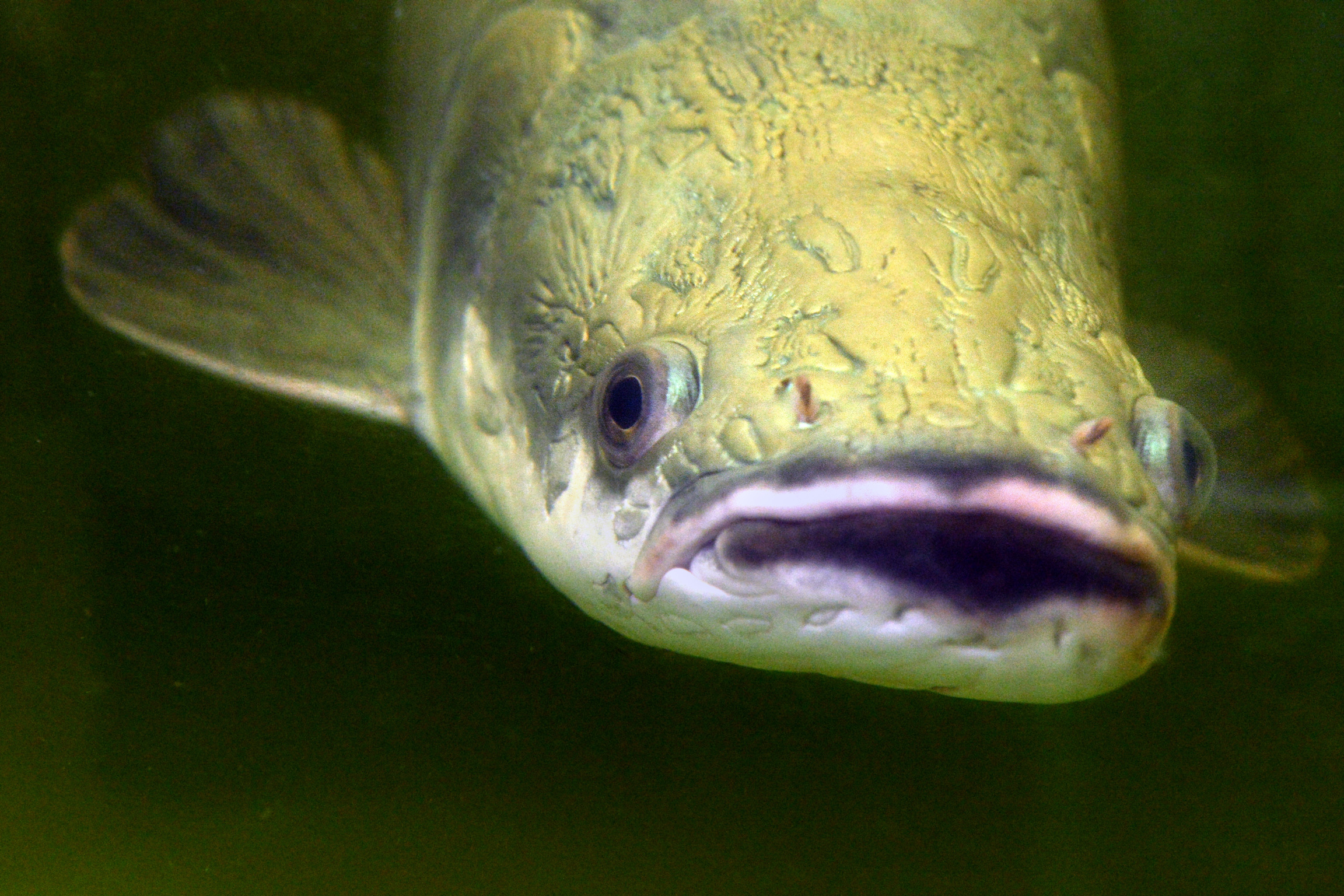
The Amazon in Brazil is home to the arapaima, a giant fish threatened by overfishing. Here, a community-based approach was adopted to save the stocks. People drew on traditional practices for managing fish stocks and combined them with their knowledge of the animals’ biology and physiology. This approach was successful in sustaining the fishery. At the same time, arapaima stocks recovered and increased tenfold. “Such nature conservation and species protection approaches are not only ecologically, but also ethically, more responsible,” said Phoebe Griffith.
Cultural value can also be harmful to species
However, there is also a downside, as the scientist explained: “The cultural significance of living creatures can threaten their very existence.” This applies to animals that are considered a delicacy, believed to have special powers or seen as a status symbol. One example of this is the Chinese giant salamander. Regarded as a symbol of wealth, it is used for food and medicine. Consequently, it is now classified as critically endangered on the Red List of Threatened Species. The same applies to sturgeon, which have been intensively fished for their caviar. Today, 25 out of the 26 species of sturgeon worldwide are under threat.
Invasive species and their cultural integration
Another aspect to consider is how invasive species become integrated into a culture, and the challenges this poses for nature conservation measures. IGB researcher Jonathan Jeschke has explored this topic. One of his studies shows how some invasive species can be accepted by the local population as valued and familiar elements of their environment. “Whether it's a plant species used in traditional recipes or an animal species celebrated at local festivals, cultural acceptance changes the way people interact with invasive species, even when they cause problems,” he explained. For example, after the invasive cattail species Typha domingensis was commodified as a popular handcraft resource, local communities in Mexico began to intentionally facilitating its invasion, which has had a negative impact on the native California bulrush (Schoenoplectus californicus), a culturally valuable and important wetland plant.
Taking the cultural aspect into account when managing invasive species
If an invasive species is culturally integrated, it becomes much more difficult for conservationists to curb its spread. Public resistance can block important management measures. In another study, Jonathan Jeschke showed that the charisma has an impact on the introduction and image of alien species and can even hinder their control. “A prominent example is the raccoon, whose cute appearance makes control more difficult because public support is often lacking,” said Jonathan Jeschke. In Italy, management actions to control the invasive grey squirrel – and to protect the native red squirrel – were prevented by protests from interest groups using cute cartoon characters of the animals.
Like Phoebe Griffith with regard to species conservation, Jonathan Jeschke believes that a sensitive approach is advisable when dealing with invasive species that are culturally integrated. “When dealing with invasive species, it is important to consider not only the scientific perspective, but also the social, cultural and economic aspects,” he said.
An example from Germany: Catch and release – an angling practice shaped by culture
© Florian Möllers, AVN
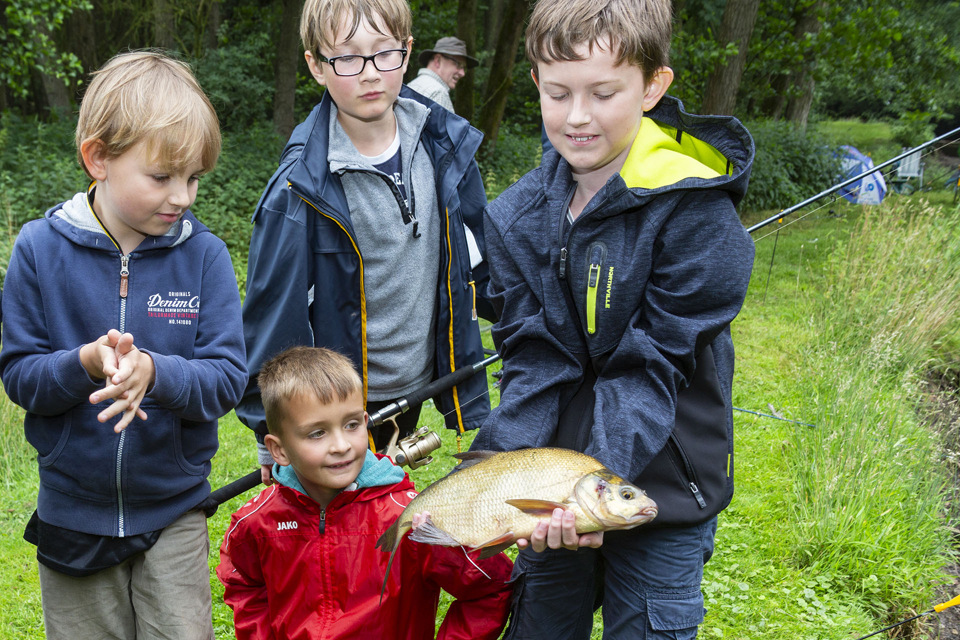
Another example of how cultural factors influence the treatment of aquatic animals can be seen in of fishing practices in Germany. A study by IGB researcher Robert Arlinghaus found that anglers in Mecklenburg-Western Pomerania are more likely to keep fish for consumption, whereas in Lower Saxony, releasing caught fish is more common. This highlights how cultural differences can influence behaviour with regard to the use of natural resources. "This finding from our diary study can be explained by differing values and norms in western and eastern Germany. In particular, there is a stronger focus on subsistence fishing in eastern Germany, as evidenced by earlier studies,” said Robert Arlinghaus.
Germans know little about fish species…
In many respects, the researcher explores the motivations behind why and how people feel connected to fish. For example, in a large-scale study, his team surveyed 1,000 people in Germany and three other European countries about their perceptions of biodiversity in rivers. The result is that the German public has rather limited knowledge of freshwater fish. Rainbow trout and brook trout, introduced from North America in the 19th century, are widely considered native species. In contrast, the Atlantic salmon, once native to the region, is primarily associated with Scandinavia rather than Germany. “This surprised us, because in species conservation circles, the salmon is often used as a flagship species for river protection and is being reintroduced through restocking in both the Rhine and the Elbe,” said Robert Arlinghaus.
…nevertheless, water protection is a high priority for them
He draws conclusions from the study regarding communication in nature conservation: “Anyone wishing to raise awareness of the threats to fish must consider their cultural significance. In countries such as Norway, where river fish such as salmon are of great economic and cultural importance, and where the threat to wild fish stocks is widely covered by the media, it makes sense to develop water protection projects centred on fish as flagship species.” In countries such as Germany, however, where the population tends to have a rather abstract interest in an intact natural environment and possesses little knowledge of fish, raising public awareness of water and fish species conservation projects is more successful when the benefits of an ecologically healthy ecosystem for individuals and society are emphasised. Ultimately, clean water and free-flowing rivers required for this benefit threatened migratory fish such as salmon and sturgeon.
Phoebe Griffith also identifies important lessons for the field of research: “As humorous as the story of the pike in the cage may be, it is not far from our current reality. So, as researchers, we should be more daring and engage with the emotional connection that links us to water and its creatures. This will encourage others to want to know and learn more about the fascinating biodiversity beneath the water's surface,” she stated.
You can also find this article and many other fascinating features in our new IGB Magazine #1 Movement >