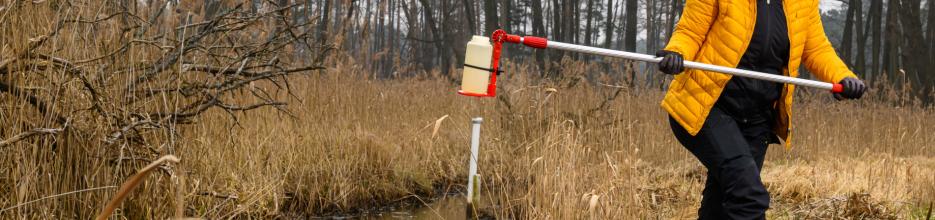

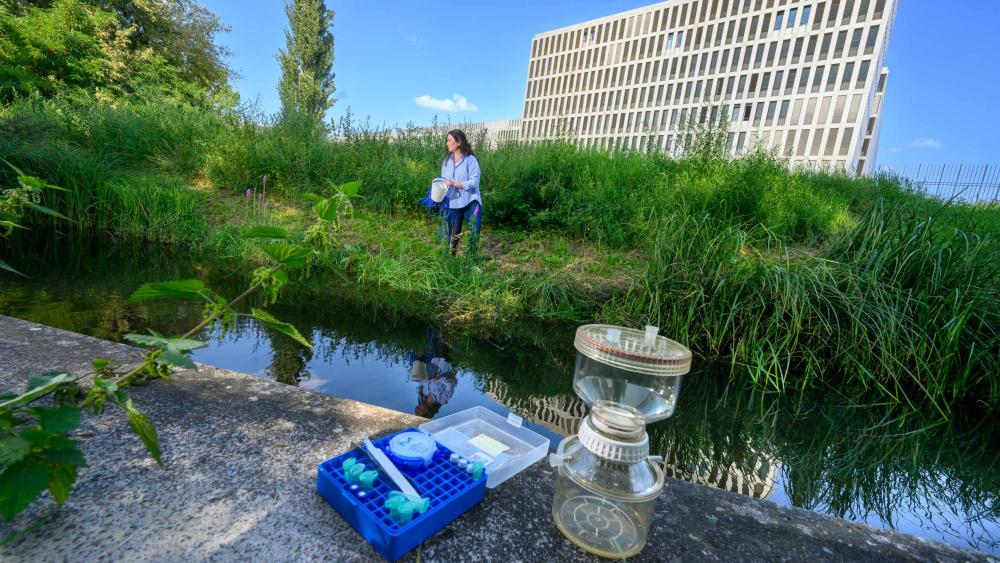
Sampling on the River Panke in Berlin as part of the BiNatUr project. | Photo: David Ausserhofer
Urban water bodies such as ponds, ditches, lakes, and streams play a crucial role in adapting to climate change. They act as cooling islands, regulate the water cycle, and provide habitat for numerous species. Therefore, the climate policy goals of many cities are supported by blue and green infrastructure.
The European Union’s Biodiversity Strategy for 2030 and the EU Nature Restoration Regulation have set concrete targets for protecting biodiversity and achieving a net-zero loss of blue and green spaces in urban environments. These include the restoration of degraded natural habitats and the implementation of new nature-based solutions. “To assess the success or failure of these policy goals, regular monitoring of restoration and implementation measures is necessary. However, there are currently few adequate frameworks for this”, said IGB researcher Dr. Maria Warter.
In the project “Bringing nature back – biodiversity-friendly nature-based solutions in cities (BiNatUr)” an international research team investigated how nature-based solutions in small urban water bodies function, using five European cities as case studies: Antwerp, Berlin, Helsinki, Lisbon, and Poznań. The project aimed to develop and apply a monitoring framework for the biodiversity and ecological functionality of aquatic nature-based solutions.
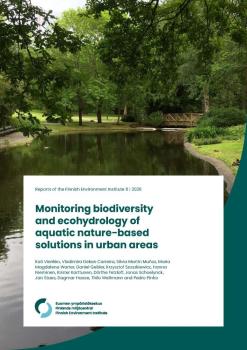
The report now presents guidelines for monitoring hydromorphological conditions, vegetation (both terrestrial and aquatic), microbial communities, invertebrates, hydrological processes, and water quality. Additionally, the report presents methods for analyzing environmental, hydrological, and ecological data, which can serve as indicators of the ecohydrological quality and biodiversity value of urban aquatic nature-based solutions.
"By using research-based monitoring methods and indicators supports the planning, implementation, and long-term maintenance of restoration interventions and aquatic nature-based solutions, improving their comprehensive management", said Professor Dörthe Tetzlaff of IGB.
Please scroll down for the download of the report.