
(Dept. 4) Fish Biology, Fisheries and Aquaculture

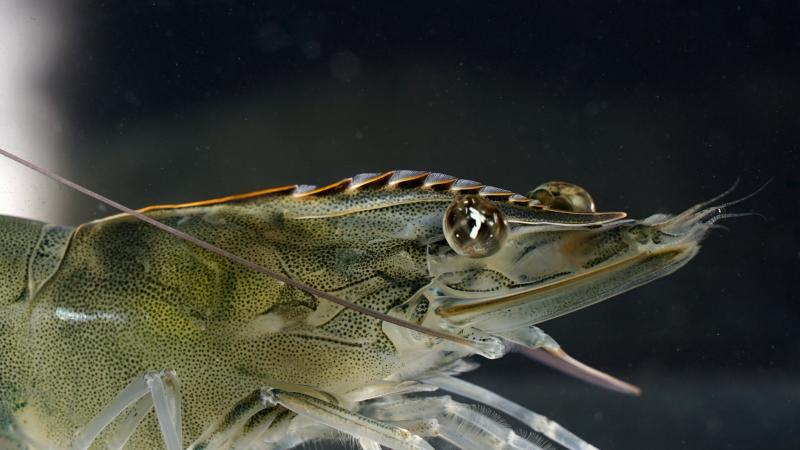
In the Department of Fish Biology, Fisheries and Aquaculture we seek to understand the ecological and evolutionary processes that structure populations and communities of freshwater fishes and affect their functions and ecological services. An important part of our work focuses on interactions between natural and anthropogenic factors and their effects on evolution, reproduction, stress, development, growth, behaviour, productivity and recreational quality of fish. Our goal is to create the scientific foundations for the conservation of wild fish populations and for sustainable fisheries management and aquaculture. The methodological approaches include hypothesis-driven laboratory research, mesocosm experimentation, lake manipulation, comparative field studies and theoretical modelling.


Department members

Selected publications
March 2026
Communications Earth & Environment. - 7(2026), Art. 303

A collaborative research agenda for restoring free-flowing rivers

Twan Stoffers; Katariina E. M. Vuorinen; Sibylle Schroer; Phoebe C. Griffith; Miriam Colls; Tibor Erős; Juergen Geist; Mathias Kuemmerlen; Socrates Schouten; Ruben van Treeck; Maria Alp; Damiano Baldan; Sebastian Birk; Olena Bilous; Florian Borgwardt; Mario Brauns; Anthonie D. Buijse; Viola Clausnitzer; Mayra E. Darre; Jelger Elings; Patrick Fink; Teresa Ferreira; Katarzyna Glinska-Lewczuk; Johannes Graupner; Daria Gundermann; Fengzhi He; Thomas Hein; Zeb S. Hogan; Lionel L’Hoste; Paul Meulenbroek; Imanol Miqueleiz; Sathaporn Monprapussorn; Camille L. Musseau; Leopold A. J. Nagelkerke; Joacim Näslund; Paula dos Reis Oliveira; Joachim Pander; Polona Pengal; Marie Pfeiffer; Sebastian L. Rock; Joshua L. Royte; Timo D. Rittweg; Anna Scaini; Astrid Schmidt-Kloiber; Stefan Schmutz; Mathias Scholz; Gabriel A. Singer; Adam Tarkowski; Kimmo T. Tolonen; Jonah Tosney; Martin Tschikof; Jimmy van Rijn; Pieterjan Verhelst; Franziska Walther; Bernhard Wegscheider; Christian Wolter; Chen Xiao; Thomas A. Worthington; Stamatis Zogaris; Sonja C. Jähnig

The Nature Restoration Regulation (NRR) calls for restoring at least 25,000 kilometres of free-flowing rivers by 2030. Translating this ambition into implementation remains challenging due to differing restoration priorities across ecological, social, economic and governance contexts. This study offers a roadmap to support the implementation of the NRR's goal of restoring free-flowing rivers. 

September 2025
Nature Reviews : Earth & Environment. - 6(2025), S. 629–631

Persistent inequities in global lake science

Qingsong Jiang; Yanxin Sun; Erik Jeppesen; John P. Smol; Donald Scavia; Robert E. Hecky; Thomas Mehner; Yue Qin; Yindong Tong; Boqiang Qin; K. David Hambright; Xiaowei Jin; Jincheng Li; Kaikui Cai; Zhen Wu; Yong Liu

The study shows that, of the approximately 2,500 lakes that had been scientifically investigated by 2020, around 50 per cent were located in North America, 21 per cent in Asia, and 16 per cent in Europe. In contrast, lakes in Africa, South America and Oceania have been much less researched.

January 2025
Nature. - 638(2025), 138–145

One-quarter of freshwater fauna threatened with extinction

Catherine A. Sayer, Eresha Fernando, Randall R. Jimenez, Nicholas B. W. Macfarlane, Giovanni Rapacciuolo, Monika Böhm, Thomas M. Brooks, Topiltzin Contreras-MacBeath, Neil A. Cox, Ian Harrison, Michael Hoffmann, Richard Jenkins, Kevin G. Smith, Jean-Christophe Vié, John C. Abbott, David J. Allen, Gerald R. Allen, Violeta Barrios, Jean-Pierre Boudot, Savrina F. Carrizo, Patricia Charvet, Viola Clausnitzer, Leonardo Congiu, Keith A. Crandall, Neil Cumberlidge, Annabelle Cuttelod, James Dalton, Adam G. Daniels, Sammy De Grave, Geert De Knijf, Klaas-Douwe B. Dijkstra, Rory A. Dow, Jörg Freyhof, Nieves García, Joern Gessner, Abebe Getahun, Claudine Gibson, Matthew J. Gollock, Michael I. Grant, Alice E. R. Groom, Michael P. Hammer, Geoffrey A. Hammerson, Craig Hilton-Taylor, Laurel Hodgkinson, Robert A. Holland, Rima W. Jabado, Diego Juffe Bignoli, Vincent J. Kalkman, Bakhtiyor K. Karimov, Jens Kipping, Maurice Kottelat, Philippe A. Lalèyè, Helen K. Larson, Mark Lintermans, Federico Lozano, Arne Ludwig, Timothy J. Lyons, Laura Máiz-Tomé, Sanjay Molur, Heok Hee Ng, Catherine Numa, Amy F. Palmer-Newton, Charlotte Pike, Helen E. Pippard, Carla N. M. Polaz, Caroline M. Pollock, Rajeev Raghavan, Peter S. Rand, Tsilavina Ravelomanana, Roberto E. Reis, Cassandra L. Rigby, Janet A. Scott, Paul H. Skelton, Matthew R. Sloat, Jos Snoeks, Melanie L. J. Stiassny, Heok Hui Tan, Yoshinori Taniguchi, Eva B. Thorstad, Marcelo F. Tognelli, Armi G. Torres, Yan Torres, Denis Tweddle, Katsutoshi Watanabe, James R. S. Westrip, Emma G. E. Wright, E Zhang & William R. T. Darwall

The largest global assessment of freshwater animals on the IUCN Red List of Threatened Species to date has revealed that 24 per cent of the world’s freshwater fish, dragonfly, damselfly, crab, crayfish and shrimp species are at high risk of extinction.

December 2024
Communications Biology. - 7(2024)1, Art. 1586

Collective anti-predator escape manoeuvres through optimal attack and avoidance strategies

Palina Bartashevich; James E. Herbert-Read; Matthew J. Hansen; Félicie Dhellemmes; Paolo Domenici; Jens Krause; Pawel Romanczuk

The research team investigated the predator-prey behaviour of striped marlins (Kajikia audax) and sardine shoals (Sardinops sagax caerulea) in the open ocean. Their findings reveal that individual prey in groups follows simple decision-making rules, which lead to complex, collective self-organized manoeuvers – and that this response is something predators can capitalize on.
December 2024
Functional Ecology. - 38(2024)10, 2123-2138

Evidence for a by-product mutualism in a group hunter depends on prey movement state

K. Pacher; J. Krause; P. Bartashevich; P. Romanczuk; P. Bideau; D. Pham; A. L. Burns; D. Deffner; F. Dhellemmes; B. Binder; K. M. Boswell; F. Galvan-Magna; P. Domenici; M. J. Hansen

Why do animals hunt in groups? The authors have shown in a field study in the ocean off Mexico: the faster the prey school moves, the higher the capture rate of the striped marlin. This is because if the prey school is moving fast, individual prey fish are more likely to become isolated. These isolated fish are then easily caught by the non-attacking marlins, an advantage of group hunting.