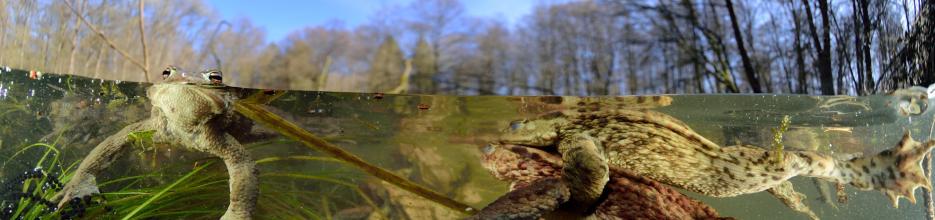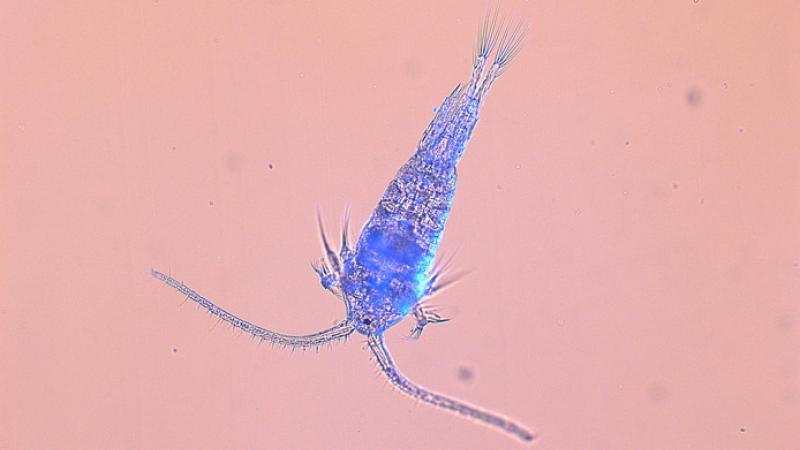

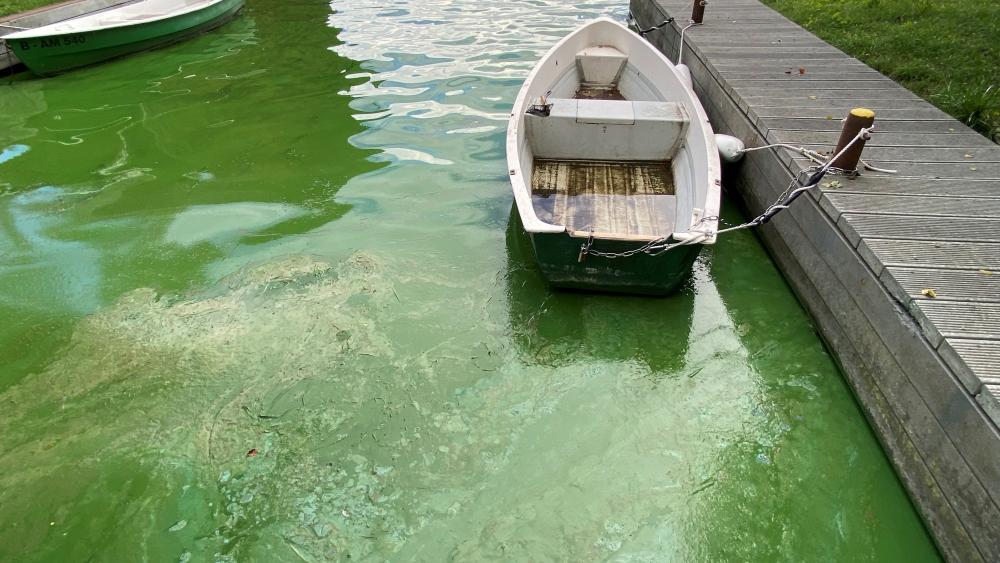
Severe seasonal algal blooms can occur in some parts of Berlin’s Müggelsee, too. | © Luc De Meester
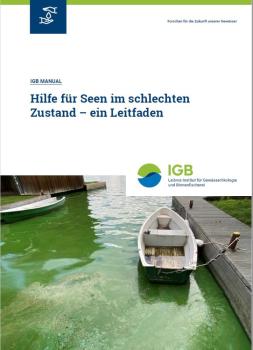
“Our publication provides a concise overview of the technical fundamentals and highlights important initial steps. Ideally, once a change in condition or a specific problem has been first observed, this can lead to a well-coordinated and structured process that benefits the lake and everyone who wishes to protect and use it sustainably,” explained Prof. Michael Hupfer, co-author and expert in lake restoration.
Not every body of standing water is a lake
A key challenge in analysing and identifying options for action is the diversity of bodies of standing water. Even within the field of inland water research, there is no universally accepted definition of a lake. Generally speaking, the term refers to a permanent, standing body of inland water that is larger than one hectare and has a water residence time of at least three days.
“But not every body of standing water is a lake,” explains Dr Sabine Hilt, co-author and expert on aquatic plants. “In general public usage, smaller bodies of standing water such as ponds or reservoirs are also referred to as lakes. However, these small to medium-sized bodies of standing water often have different ecological conditions and dynamics to those found in larger lakes, which is why established methods for managing larger lakes are not always applicable,” explains the scientist. “The basic approach is similar, though – the most important thing is to proceed in a structured manner, based on the current state of scientific and practical knowledge.”
Thorough analyses rather than remote diagnoses or promises of salvation
Natural and artificial lakes can exhibit a wide variety of different characteristics. Whilst there are various types of lake with corresponding similarities, no two lakes are exactly alike: “We receive repeated calls for help, particularly now in summer, when water bodies appear to be deteriorating. Certain causes and issues, such as nutrient and pollutant inputs, often recur, but reliable assessments based on individual situation descriptions, photos or videos cannot be made via remote diagnosis,” emphasises Michael Hupfer.
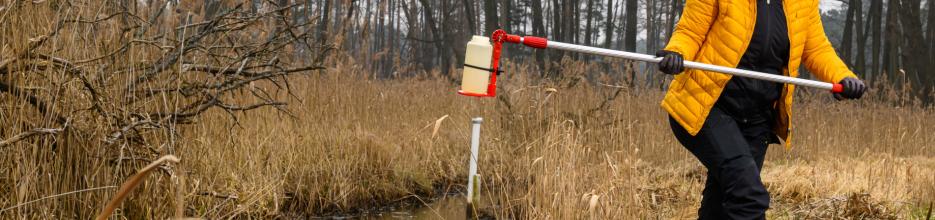
This is because it is not always immediately apparent whether the changes observed in a specific case actually indicate a need for action. Furthermore, cause and effect can be far apart in both time and space. According to the researchers, the first step is a thorough analysis of the current state and causes, which can be carried out using existing data or further investigations.
“Unfortunately, we still need to issue an explicit warning against providers who promise simple solutions but fail to provide scientifically sound evidence for their often grandly advertised products. In some cases, such offers also fall into the realm of esoteric healing claims. Before selecting methods that appear particularly unusual, an additional external expert opinion should therefore always be sought,” Michael Hupfer urges.
Who is actually responsible for a lake?
In the case of public water bodies, one or more authorities are responsible for regulating their protection and use. Water management and nature conservation authorities, for example, may be organised separately. These regulations and responsibilities may vary depending on the federal state or even between different local authorities. For smaller water bodies, the local authority is often responsible, whilst for larger ones, the federal state may also be in charge. As a first step, the relevant authority should always be contacted regarding specific on-site actions – ideally, the specific contact persons in the relevant specialist department.
Identifying conflicts of interest and creating the conditions for good communication
Apart from simply clarifying ownership, tenancy and responsibilities, the constellation of stakeholders is usually more complicated in practice: “There can be many parallel – and even conflicting – conservation and use interests, for example environmental, angling and water sports associations active on the water body, or commercial uses such as commercial fishing, boat traffic, tourist facilities or public bathing areas,” explains Michael Hupfer.
Furthermore, it cannot always be assumed that all public authorities and other stakeholders are in constant communication with one another. Where a need for action is identified, face-to-face meetings between those responsible, those affected and interested parties are helpful for ensuring efficient communication and building trust. “Round-table discussions or working and project groups involving stakeholder and user groups, for example, have proved their worth. Ideally, this allows a shared understanding of the problem to be developed,” explained Sabine Hilt.
The IGB Manual can be downloaded below this text (in German).