Evolutionsökologie von Krankheiten

Gruppenprofil
Disease Evolutionary Ecology Group, IGB

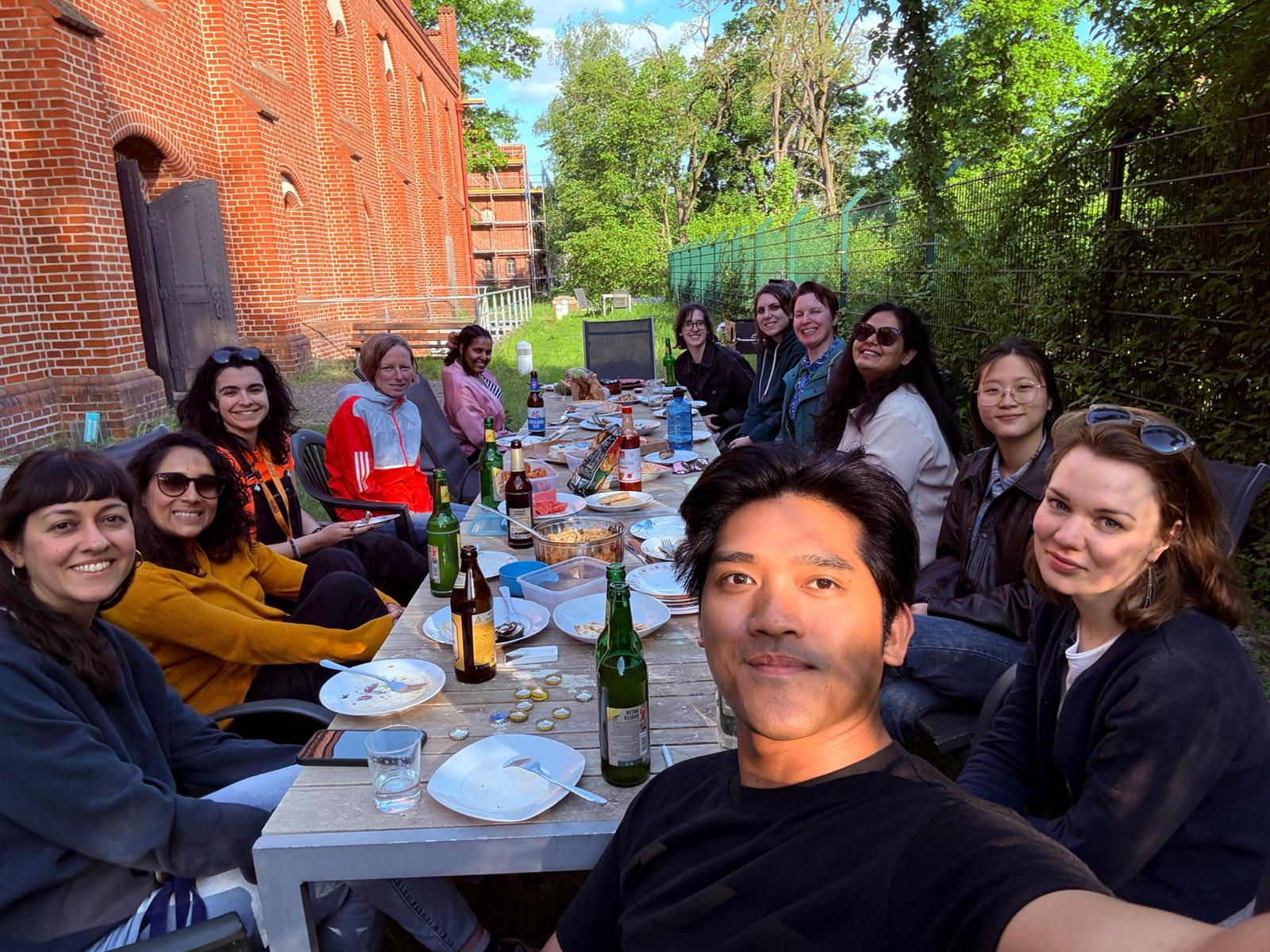
Evolutionsökologie von Krankheiten, Mai 2026

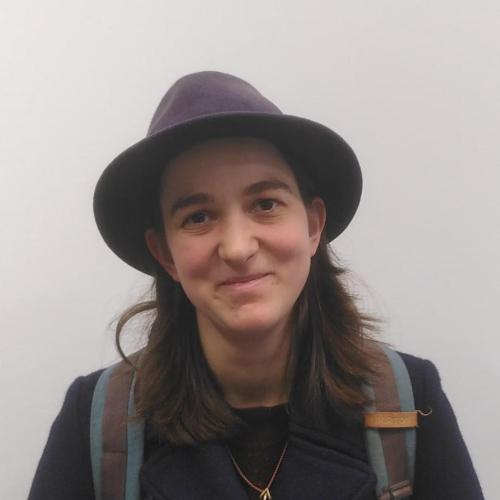
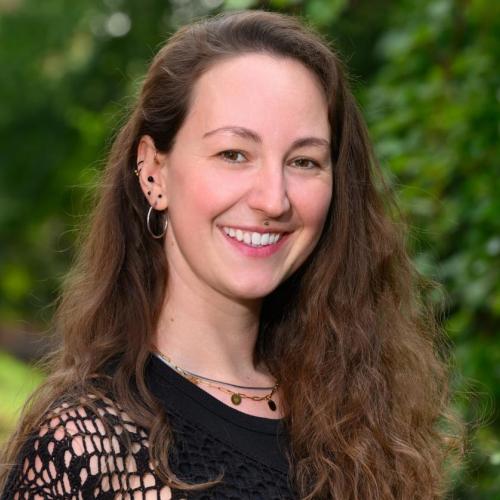
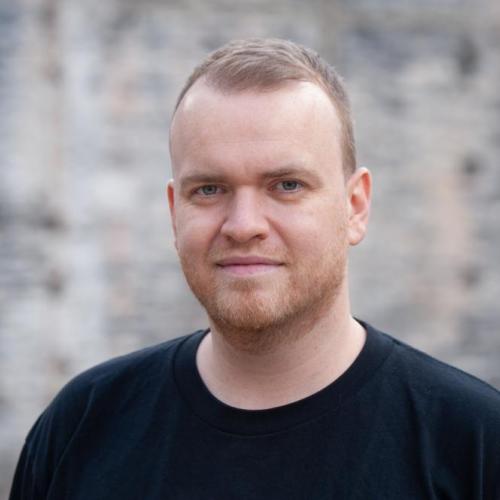
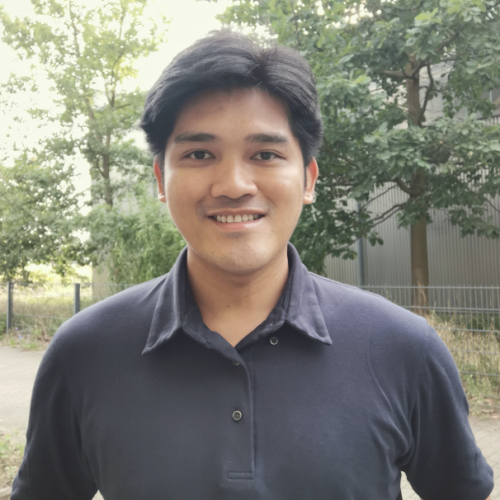
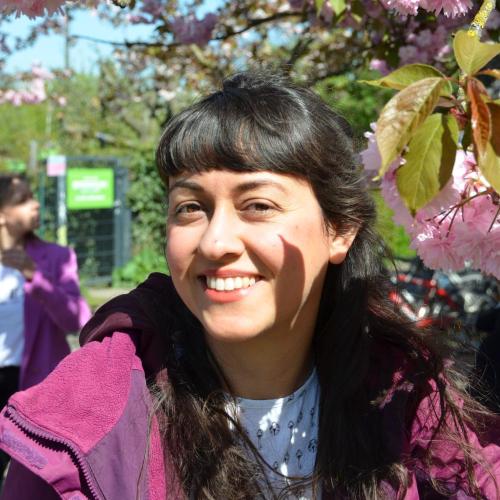
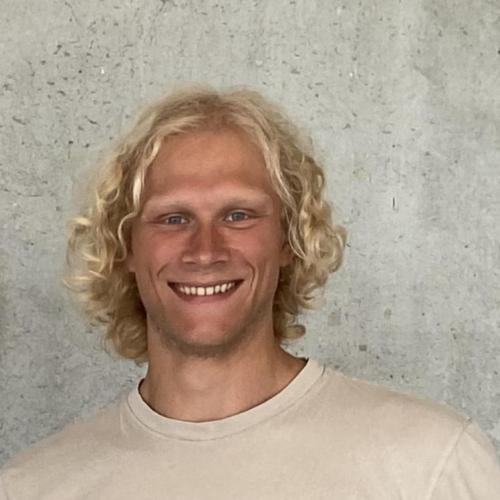
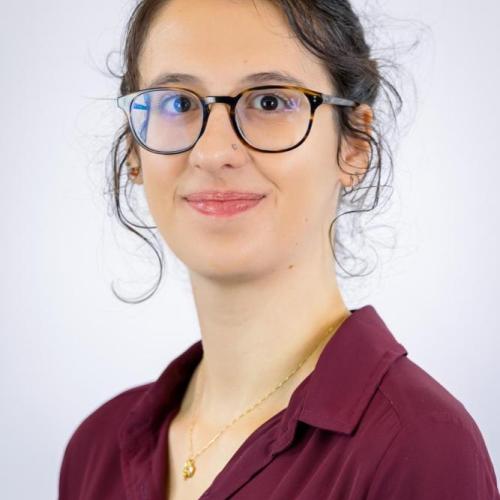
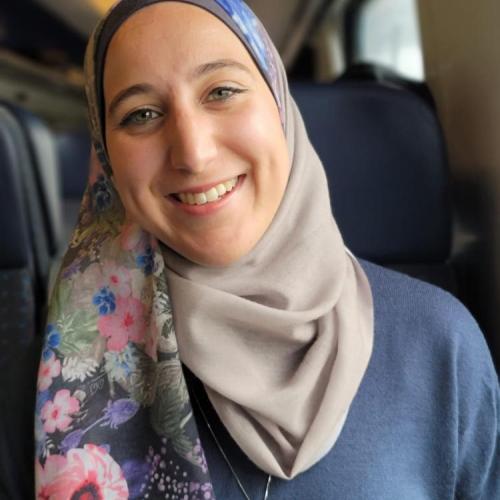
Hintere Reihe (von links nach rechts): Felix Mende, Zeno Mayr, Vanderville Villegas (Andy), Eva Pignoux

Mittlere Reihe (von links nach rechts): Erika Martinez Ruiz, Zeynep Daldaban, Anaïs Marchal, Maysan Nashashibi

Vordere Reihe (von links nach rechts): Mareike Brehm-Benedix, Benjamin Schupp, Kristel Sanchez, Le Liu, Justyna Wolinska

Nicht auf dem Foto: Gwendoline Acerbi, Juliana Hastamorir Torres, Juliana Höhne, Lucas Ernesto Dimde, Pia Gutta


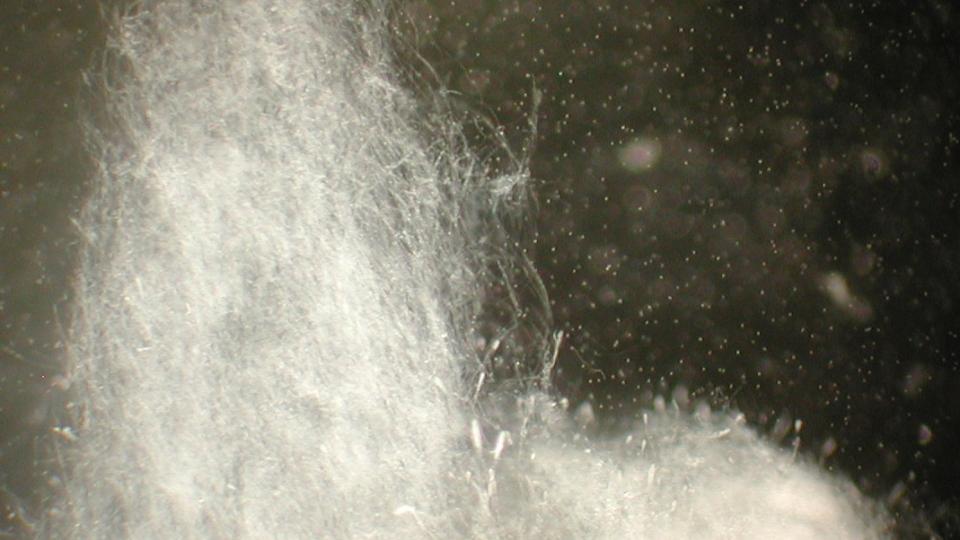
Unsere Forschung untersucht evolutionäre und ökologische Prozesse in aquatischen Ökosystemen unter den Bedingungen des globalen Umweltwandels. Ein besonderer Schwerpunkt liegt auf Wirt-Parasit-Interaktionen und der Frage, wie die Koevolution von Wirten und Parasiten mit ökologischen Prozessen unter Umweltstressoren wie Klimaerwärmung, Urbanisierung sowie anthropogenen Schadstoffen (z. B. Nanoplastik, Pestiziden und anderen neuartigen Kontaminanten) zusammenwirkt. Darüber hinaus erforschen wir, wie sich aquatische Organismen an Umweltveränderungen anpassen und wie diese evolutionären Anpassungen Populationsdynamiken, Arteninteraktionen und die Funktionsweise von Ökosystemen beeinflussen. Besonderes Interesse gilt den Wechselwirkungen zwischen Wirten, ihrem Mikrobiom, Parasiten und Nicht-Wirt-Arten im Kontext des globalen Wandels.

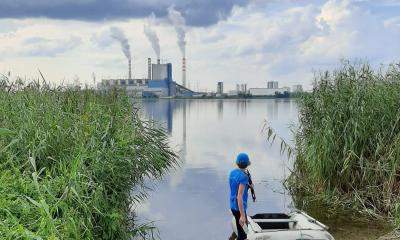
Zur Bearbeitung dieser Fragestellungen werden Freilandstudien und Laborexperimente mit verschiedenen aquatischen Modellsystemen kombiniert. Die Freilandforschung umfasst Teich- und Seeökosysteme entlang ausgeprägter Umwelt- und Urbanisierungsgradienten sowie Gewässer, die langfristig von der Klimaerwärmung beeinflusst sind. Diese Systeme ermöglichen die Untersuchung ökologischer und evolutionärer Prozesse unter realistischen Umweltbedingungen. Ergänzend werden natürliche Populationen analysiert, um Zusammenhänge zwischen Umweltbedingungen, Parasitendynamiken und Anpassungen an anthropogene Umweltveränderungen zu untersuchen. Im Labor reichen die experimentellen Ansätze von Kurzzeitexperimenten über mehrere Generationen bis hin zu Langzeit-Evolutionsexperimenten.

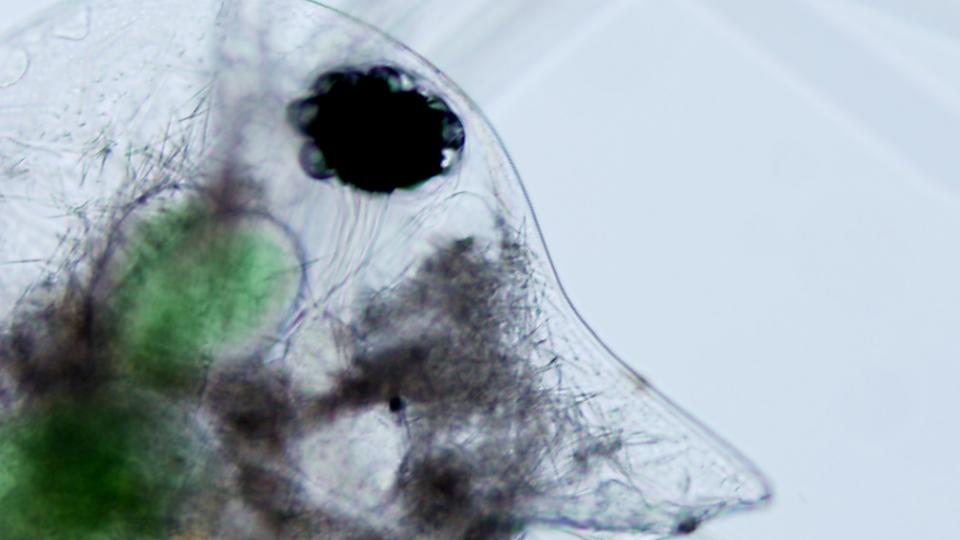
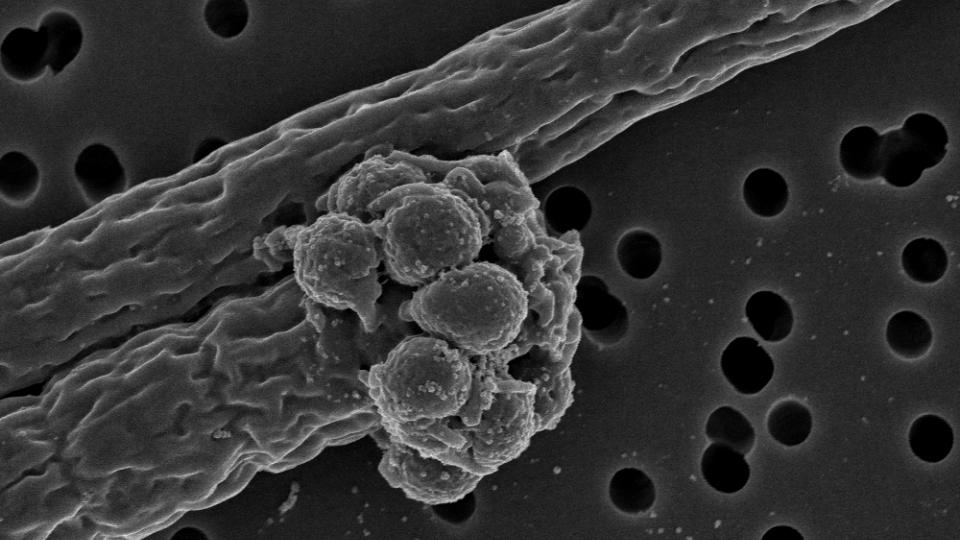
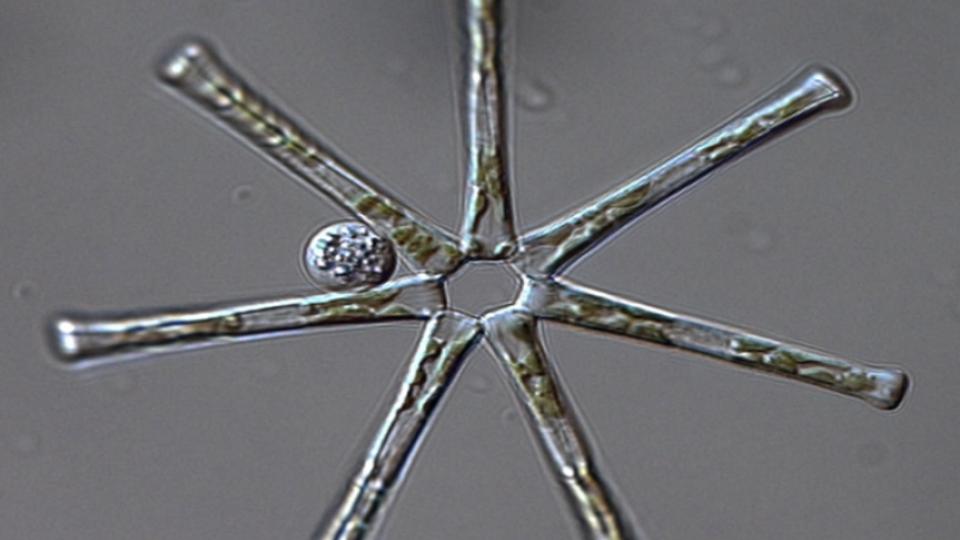
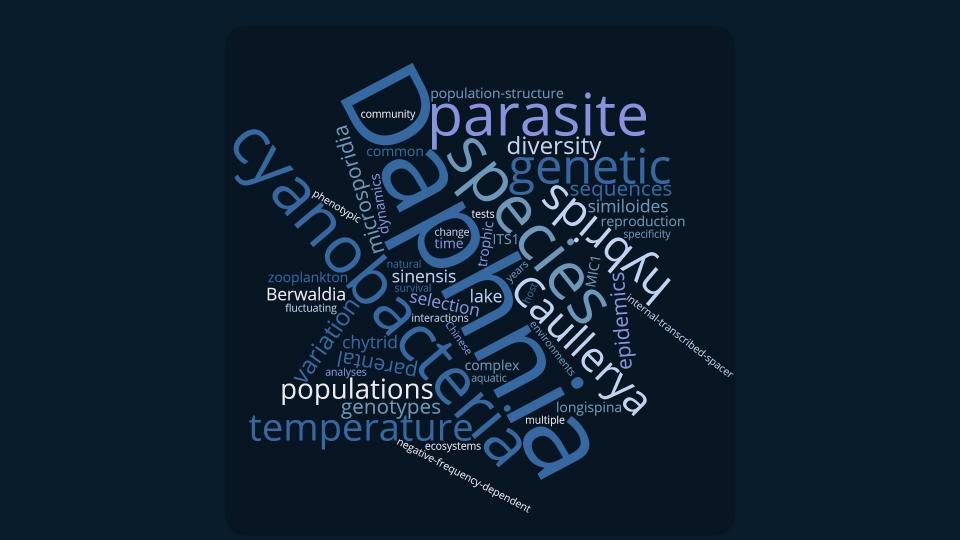
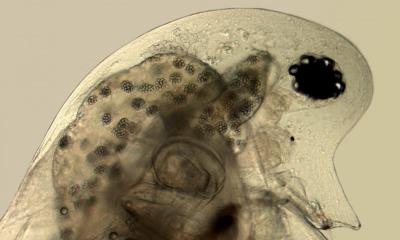
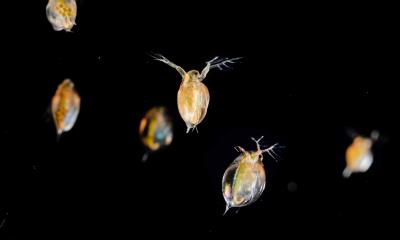
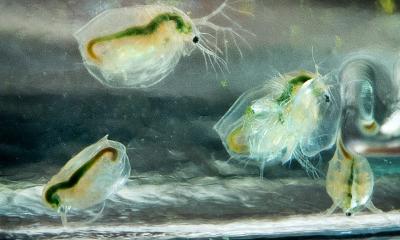
Im Mittelpunkt stehen planktonische Organismen verschiedener trophischer Ebenen aquatischer Nahrungsnetze. Untersucht werden insbesondere die Interaktionen zwischen Zooplankton Daphnia und ihren Parasiten sowie zwischen Cyanobakterien und ihren parasitischen Chytridpilzen. Darüber hinaus befassen wir uns mit der Evolution von Lebensgeschichteigenschaften, thermischer Anpassung, urbaner Evolution sowie der Anpassung an anthropogene Kontaminanten.

Durch die Verknüpfung von Freiland- und Laborstudien sowie phänotypischer und genomischer Analysen wollen wir besser verstehen und vorhersagen, wie ökologische Wechselwirkungen und evolutionäre Prozesse aquatische Ökosysteme unter zukünftigen Umweltbedingungen prägen.

Gruppenmitglieder

Alumni

Postdocs:

  • Amruta Rajarajan (2023–2025) - Funded by DFG Research Project.
  • Jürgen Strassert (2021–2024) - Funded by DFG Individual Research Grant.
  • Ramsy Agha (2014–2021) – Funded by a Humboldt Research Fellowship and DFG Individual Research Grant. 
  • Kingsly Chuo Beng (2020–2021) – Funded by the International IGB Fellowship Program. 
  • Thijs Frenken (2018–2019) – Funded by the International IGB Fellowship Program. 
  • Yameng Lu (2017–2018) – Funded by DFG Research Project.
  • Tatiana Semanova (2017) – Funded by the International IGB Fellowship Program. 
  • Melanie Gerphagnon (2016) – Funded by the International IGB Fellowship Program.

Doctoral Candidates:

  • Florent Manzi (2018–2022) – Thesis available [here]. After PhD: Postdoc at Université catholique de Louvain.
  • Manja Saebelfeld (2014-2017) Thesis available [here]. After PhD: postdoc at the Wageningen University, the Netherlands
  • Enrique Gonzalez Tortuero (2013–2016) – Thesis available [here]. After PhD: Postdoc at University College Cork, Ireland.
  • Johanna Griebel (2012–2016) – Thesis available [here]. After PhD: Data scientist in a private company in Munich, Germany.
  • Jakub Rusek (2012–2015) – Thesis available [here]. After PhD: Coordinator at the European Academies Science Advisory Council (EASAC), Brussels, Belgium.
  • Mingbo Yin (2009–2011) – Winner of the Chinese Government Award for Outstanding Students Abroad. Thesis available [here]. After PhD: Assistant Professor at Fudan University, Shanghai, China.

 MSc Students:

  • Sarah Lauck (2024)
  • Fabian Flücken (2024)
  • Nele Guttmann (2024) – Thesis resulted in the publication: Guttmann et al. 2024, Ecotoxicol Environ Saf
  • Kyla Sehner (2024) – Thesis contributed to the publication: Sanchez, Sehner et al. 2026, Hydrobiologia. After MSc: Technical assistant at IGB. 
  • Lukas Webb (2024) – Thesis resulted in the publication: Webb et al. 2024, Fresh Biol. and contributed to Funke, Webb et al. 2024, Fresh Biol. After MSc: Working at a biotechnology company.
  • Pauline Thomé (2023) – Thesis resulted in the publications: Thomé et al. 2023, Biol Lett; Thomé et al. 2024, Mol Phyl Evol. After MSc: PhD at IGB.
  • Paula Schlösser (2022) – Thesis contributed to the publication: Manzi, Schlösser et al. 2023, Phil Trans R Soc B. After MSc: Technical assistant at IGB.
  • Antonia Adlers (2022)
  • Marc Wagner (2020)
  • Charlotte Schampera (2019) – Thesis resulted in the publication: Schampera et al. 2021, Environ Pollut. After MSc: Research assistant at IGB and PhD student at HU Berlin.
  • Nesar Ghadernezhad (2019) – Thesis contributed to the publication: de Souza Machado, Ghadernezhad et al. 2023, Environ Sci Eur.
  • Bruno Kenji Ortiz-Cañavate Ozeki (2018) – Thesis resulted in the publication: Ortiz-Cañavate et al. 2019, Chemosphere.
  • Alina Gross (2016) – Thesis contributed to the publications: Agha, Gross et al. 2018, Parasitology; Agha, Gross et al. 2018, Front Microbiol. After MSc: Biology teacher.
  • Amanda Navas Faria (2013) – Winner of the 7th LMU EES annual conference: best presentation of the MSc Project. Thesis contributed to the publication: Griebel, Navas Faria et al. 2015, PLoS one. After MSc: PhD student at Georg-August-University Göttingen.
  • Gokce Ayan (2013) – Poster prize at the international SEFS conference in Münster, 2013. Thesis contributed to the following publication: Rusek, Ayan et al. 2015, J Plank Res. After MSc: PhD student at the Max Planck Institute, Kiel.
  • Felicitas Buchberger (2013) – After MSc: PhD student at LMU Munich.
  • Monika Poxleitner (2012) – Winner of the 6th EES annual conference: best presentation of the MSc Project. Thesis contributed to the following publication: Griebel, Poxleitner et al. 2015, PLoS one. After MSc: PhD student at LMU Munich.
  • Stefanie Weigl (2011) – Thesis resulted in the publication: Weigl et al. 2012, Parasitology.
  • Isara Arsiranant (2010) – After diploma: Working at the Marine and Coastal Resources Research Center in Thailand.
  • Olivia Hesse (2010) – Thesis resulted in the publication: Hesse et al. 2012, BMC Ecology. After diploma: PhD student at LMU Munich.
  • Wolfgang Engelbrecht (2010) – After diploma: PhD student at LMU Munich.
  • Jennifer Lohr (2009) – Thesis resulted in the publications: Lohr et al. 2010, Parasitology; Lohr et al. 2010, J Eukaryot Microbiol. After MSc: PhD student at the University of Fribourg, Switzerland

BSc Students:

  • Lilith Biere (2026)
  • Luka Manseck Cerazo (2024)
  • Nele Guttmann (2021) – Thesis contributed to the publication: Li, Guttmann et al. 2024, PLoS Biology.
  • Noemi Azoubib (2021) – Thesis contributed to the publication: Mavrianos, (…), Azoubib et al. 2023, Fresh Biol.
  • Louise Seemann (2020) – Thesis contributed to the publication: Manzi, Seemann et al. 2021, Parasitology.
  • Mellery Dundr (2019)
  • Yari Ossenberg (2016)
  • Christin Manthey (2015) – Thesis contributed to the publication: Agha, Manthey et al. 2016, Sci Rep. After BSc/MSc: PhD student at FU Berlin.
  • Anna May (2013) 
  • Corinna Sachs (2012)
  • Clarissa Mathieson (2012)
  • Felicitas Buchberger (2011)
  • Helena Macke (2011)
  • Eva Kluzik (2010)

Exchange & Erasmus Students:

  • Joe Money (Exchange PhD student, 2022) – Funded by the Polish National Science Center.
  • Marcin Dziuba (Exchange PhD student, 2018 & 2020) – Funded by DAAD and the Polish National Science Center.
  • Agata Owczarz (Erasmus student, 2021) – Project contributed to the publication: Manzi,…., Owczarz et al. 2023, Philos Trans R Soc B.
  • Stylianos Mavrianos (Erasmus student, 2021) – Project resulted in the publication: Mavrianos et al. 2023, Fresh Biol
  • Dilara Ogretmen (Erasmus student, 2016–2017)
  • Inbar Maayan (Erasmus student, 2014) – Project contributed to the publications: Gonzalez-Tortuero, Maayan et al. 2016, Zoology; Gonzalez-Tortuero, Maayan et al. 2016, Parasites & Vectors

Publikationen

2026

2025

März 2025
Florian Jeltsch; Manuel Roeleke; Ahmed Abdelfattah; Robert Arlinghaus; Gabriele Berg; Niels Blaum; Luc De Meester; Elke Dittmann; Jana Anja Eccard; Bertrand Fournier; Ursula Gaedke; Cara Gallagher; Lynn Govaert; Mark Hauber; Jonathan M. Jeschke; Stephanie Kramer-Schadt; Anja Linstädter; Ulrike Lucke; Valeria Mazza; Ralf Metzler; Claas Nendel; Viktoriia Radchuk; Matthias C. Rillig; Masahiro Ryo; Katharina Scheiter; Ralph Tiedemann; Britta Tietjen; Christian C. Voigt; Guntram Weithoff; Justyna Wolinska; Damaris Zurell

2024

2023

2022

2021

2020

2019

2018

2017

November 2017
Thijs Frenken; Elisabet Alacid; Stella A. Berger; Elizabeth C. Bournr; Melanie Gerphagnon; Hans-Peter Grossart; Alena S. Gsell; Bas W. Ibelings; Maiko Kagami; Frithjof C. Küpper; Peter M. Letcher; Adeline Loyau; Takeshi Miki; Jens C. Nejstgaard; Serena Rasconi; Albert Rene; Thomas Rohrlack; Keilor Rojas-Jimenez; Dirk S. Schmeller; Bettina Scholz; Kensuke Seto; Telesphore Sime-Ngando; Assaf Sukenik; Dedmer B. van de Waal; Silke van den Wyngaert; Ellen Van Donk; Justyna Wolinska; Christian Wurzbacher; Ramsy Agha

2016

2015

2014

Lab news

June 9, 2025

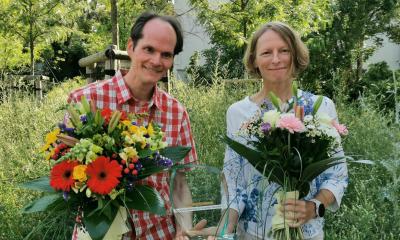
Congratulations and Welcome Dr. Le Lie :partying_face:!!!!!

May 12, 2025

Farewell to Dr. Amruta Rajajaran!!!


Dr. Le Liu has been awarded a 2-year postdoc fellowship from DAAD-CSC to join our group! Le will work on the IMPACT project starting this Fall. Le will focus on how different concentrations of nanoplastic impact Daphnia communities and their disease dynamics. 


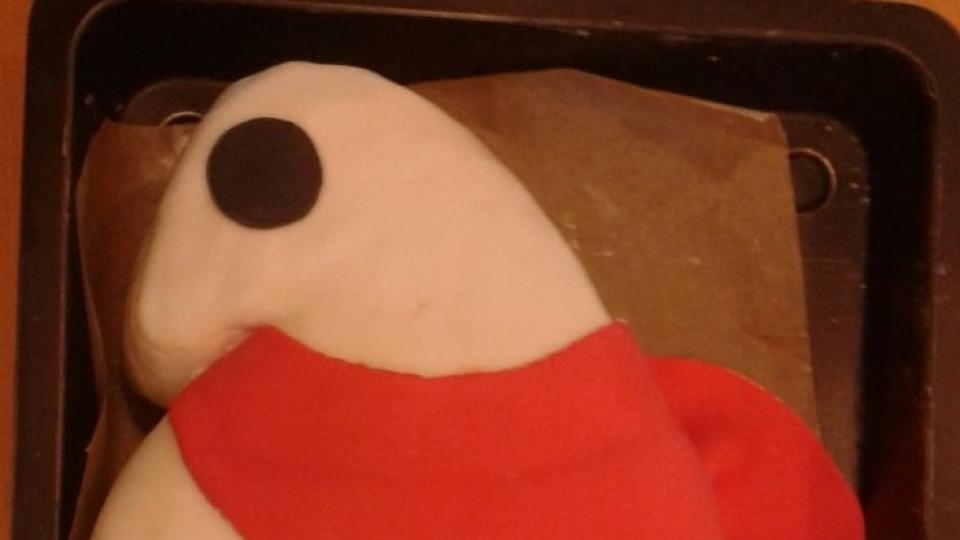
We celebrated Amrutas time in the lab and accomplishments with some good food and a fancy Daphnia cake. 
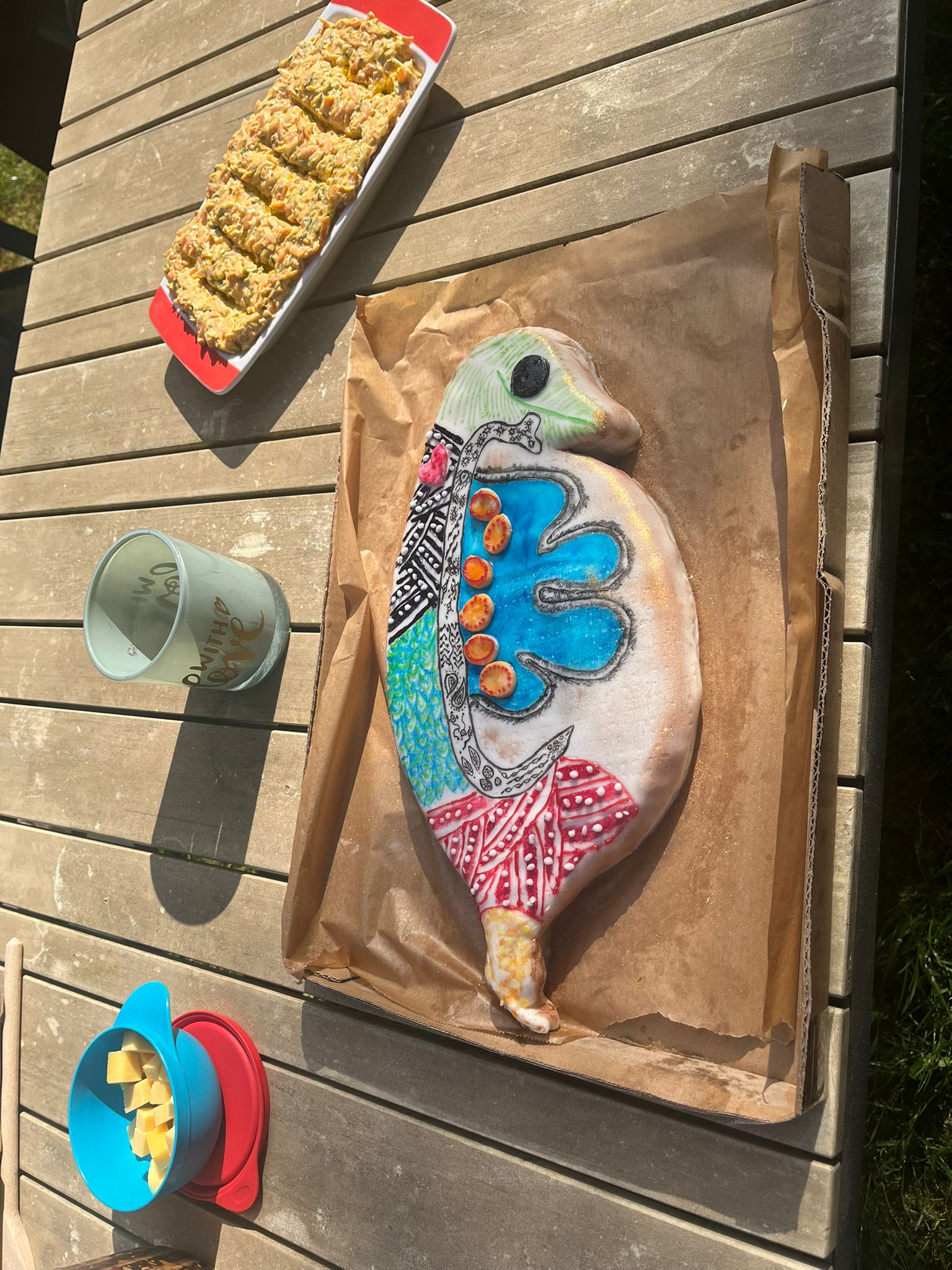
Daphnia cake

Alumni und Karrierechancen

Postdoc fellowship

If you're interested in securing a grant to support a postdoctoral position in our lab, there are several opportunities available, such as the IGB FellowshipDFG FellowshipBenjamin Walter FellowshipHumboldt FellowshipMarie-Curie FellowshipRising Star Fellowship. We encourage you to reach out and discuss how we can collaborate on your application.

Master/Bachelor project

We are eager to welcome proactive students who wish to explore their own novel research questions under our guidance and develop projects in various research areas. Potential topics could include examining the effects of environmental stressors (such as climate change) on aquatic ecosystems, biodiversity research using modern DNA-sequencing methods, experimental evolution, and more. If you’re interested, please contact us to discuss your ideas.

What Do We Offer? We provide an inspiring atmosphere within an international research group (as of September 2024, our team consists of sixteen members from nine different nationalities). You will receive the appropriate level of guidance and supervision for your project, while also having the space to work independently. We offer a genuine research experience that will benefit your future career, whether within or outside academia. Many of our previous students have achieved significant success, with Master’s and Bachelor’s projects often leading to peer-reviewed publications. Check below to see what our former students have accomplished.